






What's Happening?
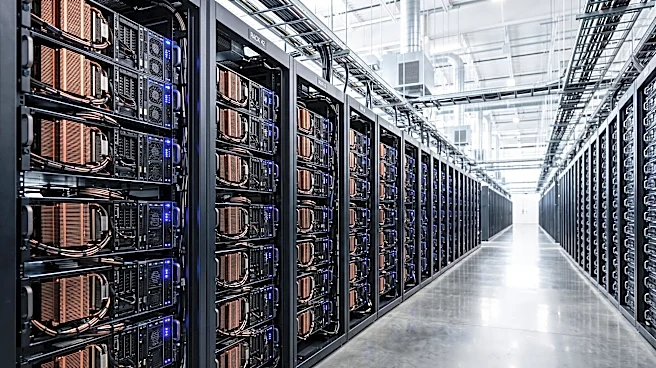
CoreWeave, a provider of GPU-heavy cloud infrastructure, is marketing a planned $4.5 billion debt sale. This financing is secured by GPU assets directly tied to a contract with Meta Platforms. Notably, this GPU-backed financing is anticipated to receive
investment-grade ratings, despite CoreWeave itself currently holding a junk credit rating. The structure of the deal is designed to link lender protection to specific hardware and the cash flows generated from the Meta contract, rather than relying on CoreWeave's broader corporate balance sheet. This approach allows CoreWeave to raise capital on more favorable terms than its overall credit profile might suggest, by ring-fencing assets and cash flows into an investment-grade structure.
Why It's Important?
This debt sale is significant for the AI infrastructure sector, demonstrating how specialist providers can secure substantial funding directly around high-demand compute contracts. For investors, it highlights a shift where funding terms, particularly those backed by specific contracts and assets, can drive the discount more than general market demand. The investment-grade rating for this Meta-backed loan, despite CoreWeave's junk rating, indicates a growing trend in financing models for capital-intensive AI build-outs. It shows that parts of a company's debt stack can be structured to sit closer to valuable contracts and hardware, mitigating risks associated with high capital expenditures and interest costs, which are common in the rapidly expanding AI data center industry.
What's Next?
The immediate next step for CoreWeave and its stakeholders will be to observe how this $4.5 billion loan is reflected in future financial filings. Key areas to watch include any changes in reported interest expenses and disclosures regarding secured versus unsecured borrowings. Additionally, the company's remaining cash runway over the next 12 months will be a critical indicator of its financial health and ability to manage its high capital expenditure requirements. The success of this financing model could also set a precedent for other AI infrastructure providers looking to fund their growth through asset-backed and contract-specific debt structures, potentially influencing future investment strategies in the sector.
Beyond the Headlines
This financing deal underscores a broader evolution in corporate finance, particularly within high-growth, capital-intensive industries like AI. It highlights the increasing sophistication of financial engineering where specific assets and contractual agreements can be leveraged to create investment-grade opportunities, even for companies with lower overall credit ratings. This approach could lead to a re-evaluation of risk assessment in the tech sector, where the value of underlying assets and long-term contracts with major players like Meta Platforms can outweigh the perceived risk of the parent company. It also points to the critical role of GPU infrastructure in the AI economy, making these assets highly attractive collateral for lenders.