





What's Happening?
The Saudi Central Bank has significantly increased its stake in Xcel Energy Inc. (NASDAQ:XEL), a Minneapolis-based utility holding company. According to its most recent 13F filing with the Securities & Exchange Commission, the bank grew its holdings by
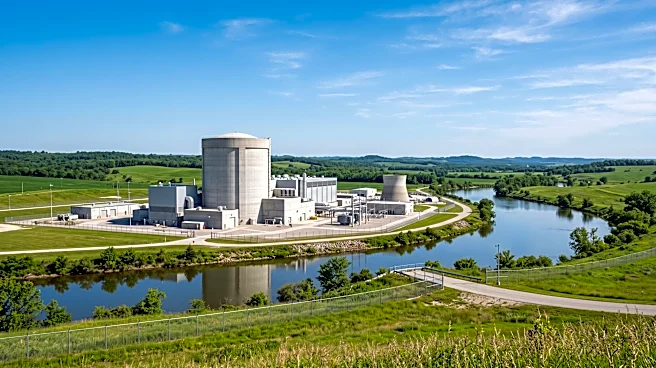
100.1% in the second quarter, acquiring an additional 21,857 shares. This brings their total ownership to 43,691 shares, valued at approximately $3,508,000. Xcel Energy is a publicly traded company that develops, owns, and operates regulated electricity and natural gas delivery systems, serving residential, commercial, and industrial customers across eight Western and Midwestern states. Its generation portfolio includes nuclear, natural gas, coal, and a growing share of renewable resources like wind and solar. Other institutional investors have also adjusted their positions in Xcel Energy, with several purchasing new stakes or boosting existing holdings during the same period. Overall, hedge funds and other institutional investors collectively own 78.38% of the company's stock.
Why It's Important?
This substantial increase in investment by the Saudi Central Bank signals a notable international confidence in the U.S. energy sector, specifically in regulated utility companies like Xcel Energy. Such investments can provide capital stability for utility providers, which are crucial for maintaining and upgrading essential infrastructure for electricity and natural gas delivery. For Xcel Energy, increased institutional ownership can lead to greater stock stability and potentially influence future strategic decisions, especially concerning its diverse energy portfolio that includes a growing emphasis on renewable resources. This move also highlights the attractiveness of U.S. utility stocks to foreign sovereign wealth funds, often viewed as stable, long-term investments due to their regulated nature and consistent demand for services. The influx of capital from major international entities can also indirectly support Xcel Energy's ongoing projects and expansion efforts, benefiting the communities it serves through improved reliability and service.
What's Next?
Following the increased stake by the Saudi Central Bank, Xcel Energy will likely continue to be a focus for institutional investors. Analysts have provided generally positive outlooks for the company, with an average rating of "Buy" and an average target price of $92.41. The company recently announced a quarterly dividend of $0.5925 per share, payable on October 20th, which further enhances its appeal to income-focused investors. Xcel Energy's financial performance, including its reported earnings per share of $0.93 for the last quarter (beating consensus estimates), suggests a stable operational trajectory. Future developments will likely involve the company's continued investment in its generation portfolio, particularly in renewable energy, and its efforts to meet the energy demands of its 3.4 million electricity and 1.9 million natural gas customers. The company's stock performance will be closely watched by the market, especially given the significant institutional interest.
Beyond the Headlines
The Saudi Central Bank's increased investment in Xcel Energy extends beyond a simple financial transaction; it reflects a broader global trend of sovereign wealth funds diversifying their portfolios into stable, essential infrastructure assets in developed economies. For the U.S., this inflow of foreign capital into critical utilities underscores the perceived security and regulatory predictability of its energy market. It also subtly highlights the interconnectedness of global finance, where geopolitical entities seek to secure returns by investing in foundational sectors. This investment could also be seen in the context of global energy transitions, as Xcel Energy's portfolio includes a growing share of renewable resources. Such foreign investments can influence the pace and direction of energy infrastructure development, potentially accelerating the shift towards cleaner energy sources within the U.S. while also ensuring the reliability of traditional energy supplies.