







What's Happening?
Canfor Corporation, a Canadian company specializing in low-carbon forest products, has been identified as a significant supplier within the U.S. building boards market. The company, headquartered in Vancouver, BC, operates in the Paper and Forest Product
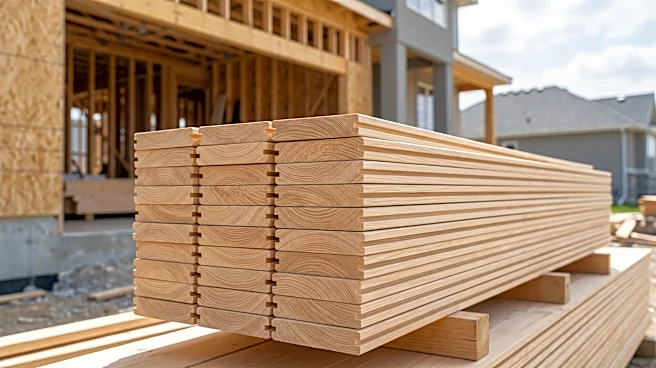
Manufacturing industry, focusing on wood products manufacturing, including lumber, pulp, and paper. In the building boards sector, Canfor Corporation is noted for its extensive timber resources, which enable it to serve both residential and nonresidential segments effectively. While it contributes to both, the company demonstrates particular strength in providing solutions for residential construction. This positioning places Canfor alongside other major suppliers in a market characterized by distinct product types: residential boards, which prioritize aesthetics and ease of installation, and nonresidential boards, which demand enhanced durability and compliance with stricter regulations for commercial structures. The company's involvement highlights its role in supplying essential materials for the U.S. construction industry.
Why It's Important?
Canfor Corporation's role as a key supplier in the U.S. building boards market is important for several reasons. Its strong presence, particularly in the residential sector, indicates its contribution to the housing market, which is a significant driver of the U.S. economy. The availability of building materials from major suppliers like Canfor directly impacts construction costs, project timelines, and the overall supply chain stability for U.S. builders and developers. Given the company's focus on low-carbon forest products, its operations also align with growing sustainability trends within the U.S. construction industry, potentially influencing environmental practices and material choices. Furthermore, as a Canadian entity with a substantial U.S. market presence, Canfor's activities underscore the interconnectedness of the North American timber and construction industries, where cross-border trade and supply chains are crucial for meeting demand. Any shifts in Canfor's production, pricing, or operational strategies could have ripple effects on U.S. housing affordability and construction sector dynamics.
What's Next?
As the U.S. building boards market continues to evolve, Canfor Corporation is expected to reinforce its position by aligning with emerging trends in design and sustainability. The company's ability to adapt to changing technical requirements and end-user expectations in both residential and nonresidential segments will be crucial. Future developments in the U.S. housing market, including demand for new homes and renovation projects, will directly influence Canfor's operational strategies and production volumes. Additionally, ongoing discussions and policies related to sustainable forestry and low-carbon products in the U.S. could further shape Canfor's market approach and product offerings. The competitive landscape, with other major suppliers like Kronospan and Boise Cascade Holdings LLC, will also necessitate continuous innovation and strategic positioning from Canfor to maintain its market share and influence within the U.S. construction material supply chain.
Beyond the Headlines
Beyond its immediate market impact, Canfor Corporation's significant presence in the U.S. building boards market touches upon broader themes of international trade, resource management, and environmental responsibility. As a Canadian company supplying the U.S., its operations are subject to trade policies and tariffs between the two nations, which can affect material costs and availability for U.S. consumers and businesses. The emphasis on 'low-carbon forest products' also highlights the increasing pressure on the construction industry to adopt more sustainable practices. This trend could lead to greater demand for certified wood products and environmentally friendly building materials, potentially driving innovation and competition among suppliers. Furthermore, the reliance on extensive timber resources raises questions about sustainable forestry practices and the long-term ecological impact of large-scale wood product manufacturing, underscoring the ethical and environmental dimensions of the building materials supply chain in the U.S.