




What's Happening?
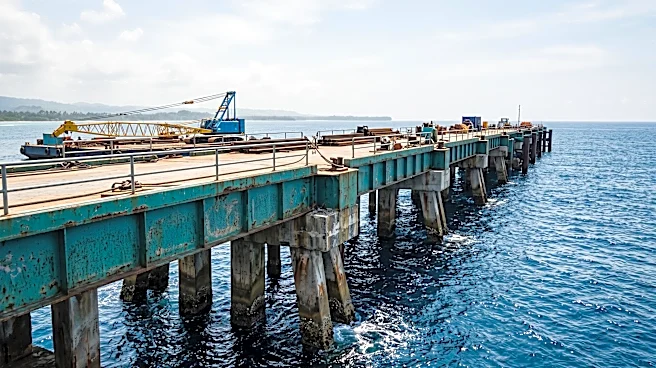
Chevron has opted out of funding the engineering and design phase for a proposed deep-water port in Guyana, a project estimated to cost between US$1 billion and US$2 billion. This decision came after Chevron acquired Hess's shares, inheriting a prior
notional agreement where Hess had funded initial pre-front-end engineering and design (pre-FEED) studies. According to Harry Pastuszek, Bechtel's Guyana manager, Hess had spent $4 million on these initial studies. Bechtel, a major U.S. engineering firm, had completed the pre-FEED work two years ago to determine the port's cost and design. Chevron's acquisition led to a re-evaluation of the commitment, resulting in their withdrawal from further funding for the project's engineering and design phases.
Why It's Important?
Chevron's decision to withdraw funding for the deep-water port's engineering and design in Guyana carries significant implications for the project and regional development. The proposed port is crucial for opening northern Brazil to Atlantic trade via Guyana, potentially creating a shorter and more reliable route for manufactured goods. The U.S. Export-Import Bank has already expressed interest in financing the phase three engineering design study, indicating U.S. strategic interest in the project. Chevron's withdrawal could delay the project's timeline and necessitate the Guyanese government seeking alternative funding sources, such as Qatar, which has shown interest. This situation highlights the complexities of large-scale infrastructure projects, especially when corporate acquisitions lead to shifts in strategic priorities and financial commitments, impacting economic development and international trade routes.
What's Next?
Following Chevron's withdrawal, the Guyanese government is actively pursuing alternative financing and conducting further feasibility studies. Bechtel is currently contracted by the Guyanese government to update a 2016 feasibility study by the Inter-American Development Bank, focusing on the port's potential for northern Brazil. The U.S. Export-Import Bank has issued a letter of interest to finance the phase three engineering design study, which could cost around US$50 million, pending the completion of the current feasibility study. Additionally, Guyana's President Irfaan Ali has indicated that Qatar is interested in providing unspecified financing for the port's construction. These efforts suggest a continued commitment to the project, with various international stakeholders exploring its viability and potential contributions.
Beyond the Headlines
Chevron's decision underscores the strategic re-evaluations that often follow major corporate mergers and acquisitions. While Hess had an initial commitment, Chevron's integration of Hess's assets led to a different assessment of the deep-water port project's alignment with its broader corporate strategy. This situation also highlights the growing geopolitical and economic importance of Guyana, particularly with its burgeoning oil and gas sector and its potential as a trade gateway for South America. The involvement of entities like the U.S. Export-Import Bank and Qatar signals international interest in the region's infrastructure development, reflecting a broader competition for influence and economic partnerships in emerging markets. The long-term success of the port will depend on securing stable funding and navigating complex international partnerships.