
What's Happening?
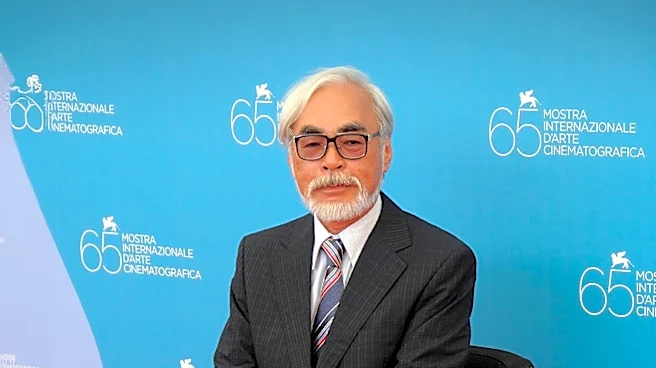
Hayao Miyazaki, the renowned director of Studio Ghibli, has consistently integrated environmental themes into his animated films, from 'Nausicaä of the Valley of the Wind' to 'Ponyo on the Cliff by the Sea'
and 'Princess Mononoke'. His work often depicts nature with intricate detail and vibrant life, showcasing moss textures, tree barks, sunlight, and flowing water. Miyazaki's approach is not to preach but to reflect the reality of human impact on the environment. He has expressed a deep fascination with nature since childhood, particularly the sea, which he explored in 'Ponyo'. However, he acknowledges the stark contrast between the pristine marine environments of his youth and the polluted oceans of today. In promoting 'Ponyo' in 2009, Miyazaki noted that when he draws the sea, he feels compelled to depict it filled with trash, often making the pollution more realistic than the sea itself. He even suggested that the depiction of trash in 'Ponyo' might have been too clean compared to reality. Over the years, Miyazaki has grown increasingly disillusioned with the environmental changes in Japan, leading him to state, partly in jest, partly seriously, that he hopes for a day when real estate companies go bankrupt, Japan becomes impoverished, and wild grass reclaims the land.
Why It's Important?
Miyazaki's consistent focus on environmental degradation through his globally recognized films holds significant cultural and social importance. His work, viewed by millions worldwide, subtly educates audiences, including those in the U.S., about ecological issues without resorting to overt sermonizing. By presenting the beauty of nature alongside the harsh realities of pollution, he fosters a deeper appreciation for environmental preservation and highlights the consequences of human actions. This artistic approach can influence public perception and encourage environmental consciousness, potentially inspiring discussions and actions related to conservation and sustainability. His disillusionment with Japan's development reflects a broader global concern about unchecked urbanization and industrialization, resonating with environmental movements and policy debates in various countries, including the U.S., regarding land use, waste management, and ecological balance. His statements, while specific to Japan, echo sentiments about the need for a re-evaluation of societal priorities concerning economic growth versus environmental health.
What's Next?
While Miyazaki's statements are more reflective of his personal philosophy and artistic vision rather than a call to immediate action, his ongoing influence through Studio Ghibli's legacy will likely continue to shape environmental discourse in popular culture. Future generations of filmmakers and artists may draw inspiration from his nuanced portrayal of environmental themes, perpetuating the conversation about humanity's relationship with nature. His films are frequently screened and celebrated in the U.S., ensuring that his environmental messages remain relevant to American audiences. As global environmental challenges intensify, Miyazaki's artistic contributions serve as a timeless reminder of the ecological stakes. His hope for a natural reclamation of land, though extreme, underscores a growing sentiment among environmental advocates for more sustainable development practices and a re-evaluation of urban expansion. This perspective could subtly influence future urban planning discussions and environmental policy considerations, encouraging a balance between development and ecological preservation.
Beyond the Headlines
Miyazaki's seemingly radical wish for Japan's impoverishment and natural reclaim delves into deeper philosophical and ethical questions about progress, civilization, and humanity's place in the natural world. It challenges the conventional notion that economic growth and urbanization are unequivocally positive. His perspective suggests a critique of modern consumerism and the relentless pursuit of development at the expense of ecological health. This viewpoint resonates with eco-philosophical movements that advocate for a re-evaluation of human-centric worldviews and a greater respect for the intrinsic value of nature. The tension between an idealized natural world and the polluted reality depicted in his films highlights a profound cultural dilemma: how to reconcile human aspirations with ecological limits. His work encourages a critical examination of societal values and the long-term consequences of current trajectories, prompting audiences to consider alternative futures where nature plays a more dominant role, even if it means a reduction in conventional human prosperity. This ethical dimension extends to discussions about environmental justice and the responsibility of current generations towards future ones.