



What's Happening?
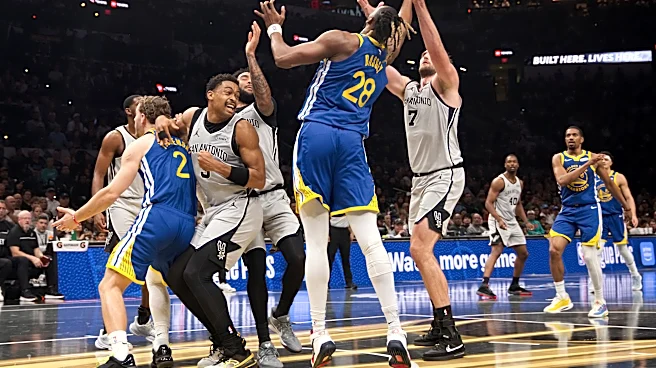
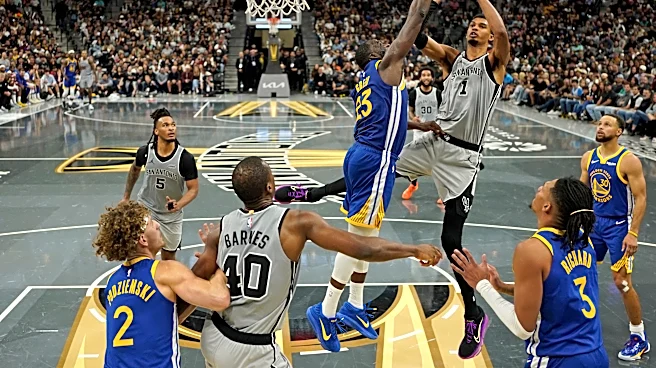
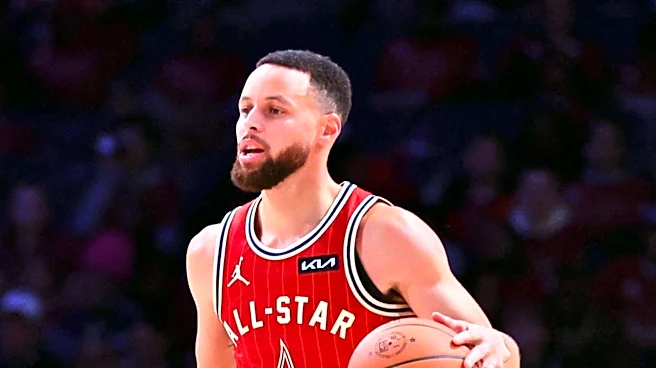
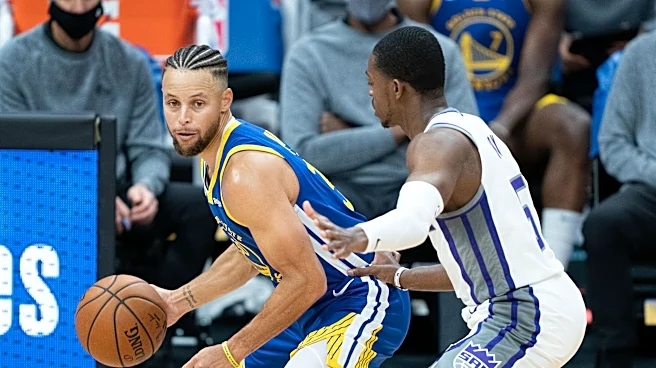
Golden State Warriors guard Stephen Curry has been named the highest-paid NBA player for the second year in a row by Forbes, making him the first active NBA player to earn over $200 million in a single year. Curry's earnings are attributed to his exceptional
talent as the NBA's all-time leader in 3-pointers and his four NBA titles. He secured a two-year, $116 million extension in September and a new shoe endorsement deal with Chinese brand Li-Nung worth $400 million over 10 years. This season, Curry is projected to earn $62.6 million on the court and an additional $141 million from business deals. Despite these significant earnings, the article suggests Curry remains 'underpaid' due to past team-friendly contracts that allowed the Warriors financial flexibility to build championship rosters. His influence extends beyond the court, inspiring younger generations with his persona and contributing to the Warriors' status as the NBA's most valuable team.
Why It's Important?
Stephen Curry's financial achievements highlight the evolving landscape of athlete compensation in professional sports, particularly in the NBA. His ability to command such high earnings, even while being considered 'underpaid' relative to his market value and impact, underscores the significant financial leverage star athletes can wield. This trend affects team salary cap management, influencing how franchises build and maintain competitive rosters. Curry's past decisions to accept less than his maximum potential earnings to aid team flexibility set a precedent for player-team dynamics, demonstrating a balance between individual financial gain and collective success. Furthermore, his substantial endorsement deals, like the one with Li-Nung, reflect the global appeal of NBA stars and their capacity to drive revenue for brands, impacting the broader sports marketing industry and the valuation of athletes as global icons.
What's Next?
Curry's continued high earnings and marketability are likely to influence future contract negotiations for other top-tier NBA players, potentially pushing salary expectations higher across the league. His ongoing success and 'underpaid' status could also fuel discussions about the NBA's labor deal, particularly regarding player equity stakes in franchises, a point Curry himself has raised. From a team perspective, the Warriors will continue to leverage Curry's star power and on-court performance to maintain their high valuation and fan engagement, despite current playoff struggles. His recent abdominal strain, which has sidelined him, will be closely monitored, as his health directly impacts the team's performance and market appeal. The long-term implications of his endorsement deals, especially with international brands, will also be a key area to watch for trends in global sports marketing.
Beyond the Headlines
Beyond the impressive financial figures, Curry's narrative delves into the complex relationship between athlete compensation, team loyalty, and societal impact. His willingness to take 'pay cuts' for team success, while still achieving record earnings, challenges conventional notions of individual ambition versus collective good in professional sports. His philanthropic efforts through his foundation, which has invested significantly in Oakland's schools and underserved communities, highlight the growing role of athletes as social agents. This blend of financial prowess, on-court excellence, and community engagement positions Curry as a multifaceted figure whose influence transcends basketball. His perspective on NBA players being 'underpaid' due to the lack of equity stakes in franchises also opens a broader ethical discussion about the distribution of wealth and ownership within professional sports leagues.