




What's Happening?
Arsenal's billionaire owner, Stan Kroenke, has secured a new personal loan from Deutsche Bank, using the club's shares, broadcast income, and training ground as security. This development, revealed in documents filed at Companies House, shows a replacement
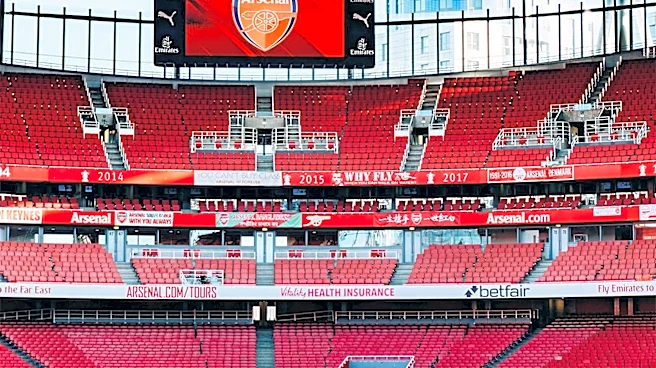
of a previous loan facility with Barclays. The size and purpose of the new borrowing have not been disclosed. The Arsenal Supporters’ Trust (AST) has approached the club for clarification, stating they were assured this is a rearrangement of the existing debt structure, with Deutsche Bank taking over as the primary lender. The Emirates Stadium is also included as collateral, pending approval from the Independent Football Regulator, which recently gained powers requiring clubs to seek approval before using stadiums as security. Arsenal has committed not to sell the stadium or grant security over it to another party while approval is pending. Sources familiar with the process claim the funds are intended for investment in the north London club, not for other sports franchises or personal expenditure.
Why It's Important?
This financial maneuver by Stan Kroenke, a prominent U.S. sports owner, highlights the complex financial structures often involved in professional sports club ownership, particularly when U.S. billionaires acquire international assets. The use of club assets as collateral for a personal loan, even if intended for club investment, raises concerns about financial transparency and the potential risks to the club's long-term stability. For U.S. sports fans and investors, it underscores the varying regulatory environments between U.S. and international sports leagues. The involvement of the Independent Football Regulator in the UK, which now requires approval for stadiums used as loan security, demonstrates a growing trend towards greater oversight in European football, a contrast to the often less regulated financial dealings in some U.S. sports franchises. The AST's proactive questioning reflects the significant role fan groups play in European football governance, a level of engagement less common in U.S. professional sports.
What's Next?
The Arsenal Supporters’ Trust (AST) has requested an update on the loan at the next Arsenal Fan Advisory Board meeting, which will be attended by club co-chair Josh Kroenke. The AST also plans to engage with the Independent Football Regulator (IFR) to understand their role in such deliberations and how supporter groups will be involved. The IFR's approval is still pending for the Emirates Stadium to be included as collateral, and Arsenal has committed not to sell the stadium or grant security over it to another party until this approval is granted. The outcome of these discussions and the IFR's decision will determine the full implications of this financial restructuring for Arsenal. This situation could set a precedent for how the IFR exercises its new powers regarding club asset security.
Beyond the Headlines
The pledging of a football club's core assets, such as its training ground and stadium, as security for an owner's personal loan, even if for club investment, touches upon broader ethical and governance questions in sports ownership. It highlights the potential for blurred lines between an owner's personal finances and the club's financial health. While sources suggest the funds are for the club, the lack of public disclosure regarding the loan's size and precise purpose can erode trust among fans and stakeholders. This scenario also underscores the increasing financialization of global sports, where clubs are viewed not just as sporting entities but as valuable assets for leveraging capital. The scrutiny from the AST and the IFR reflects a growing demand for greater accountability and transparency from club owners, particularly those with vast international business interests like Stan Kroenke's Kroenke Sports & Entertainment.