




What's Happening?
SambaNova, a leader in next-generation AI infrastructure, is actively recruiting Compiler Engineer Interns for its summer program. The company specializes in a full-stack inference platform, utilizing its proprietary Reconfigurable Dataflow Unit (RDU)
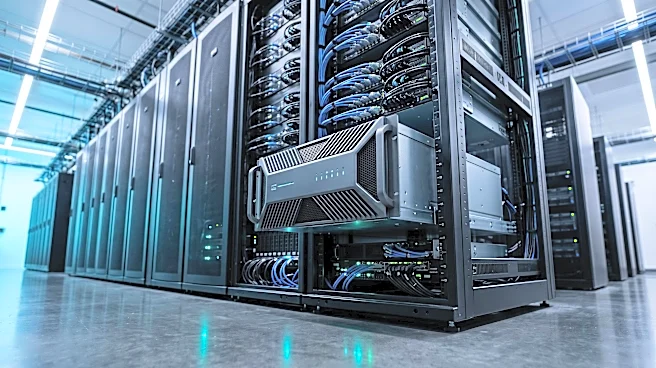
chip, which operates on a dataflow architecture distinct from traditional GPUs. These RDUs are integrated into SambaRack hardware, designed to offer superior performance, energy efficiency, and faster deployment for state-of-the-art AI models. Interns will engage in hands-on projects within the compiler team, focusing on areas such as IR and pass infrastructure, model lowering and partitioning, tensor tiling, and memory management. The role involves writing code in C++ and Python, debugging, and collaborating with runtime and hardware teams. The 12-week program includes dedicated mentorship, project presentations, and opportunities for high-performing interns to return or secure full-time positions.
Why It's Important?
This recruitment drive by SambaNova highlights the ongoing demand for specialized talent in the rapidly evolving field of artificial intelligence, particularly in hardware and compiler design. By investing in intern programs, SambaNova is cultivating the next generation of engineers who will contribute to its unique dataflow architecture, a key differentiator in the competitive AI market. The company's focus on optimizing AI models for performance and energy efficiency through its RDU and SambaRack technology is crucial for businesses seeking to deploy complex AI applications like large language models and computer vision. The development of robust compiler strategies that fuse kernels into dataflow graphs directly impacts the efficiency and scalability of AI infrastructure, offering significant advantages to Fortune 5000 companies that rely on advanced AI capabilities.
What's Next?
SambaNova's summer internship program will provide selected candidates with practical experience in cutting-edge AI compiler development. Interns will work on projects that directly influence the performance and capabilities of SambaNova's RDU technology. Upon completion of the program, successful interns may be considered for future internships or full-time employment, contributing to SambaNova's long-term talent pipeline. The company's continued innovation in AI infrastructure, driven by these engineering efforts, is expected to further enhance its offerings for enterprise clients, particularly in areas requiring high-performance and energy-efficient AI solutions. This ongoing development will likely solidify SambaNova's position as a key player in the AI hardware and software ecosystem.
Beyond the Headlines
The emphasis on a dataflow architecture, as opposed to traditional GPU models, by SambaNova represents a significant trend in the AI industry towards specialized hardware designed for specific AI workloads. This approach aims to overcome the limitations of general-purpose processors, offering optimized solutions for complex AI tasks. The development of sophisticated compilers that can effectively translate machine learning models into efficient dataflow graphs is critical for unlocking the full potential of such architectures. This shift could lead to a broader re-evaluation of hardware design principles in AI, potentially fostering greater innovation in custom-built AI accelerators. The ethical implications of powerful AI infrastructure, particularly in areas like agentic workloads and code generation, also warrant consideration as these technologies become more prevalent.