





What's Happening?
Rivian Automotive reported a 27% year-over-year increase in Q2 2026 revenue, reaching $1.66 billion, with an adjusted loss of $0.47 per share. Despite the revenue growth, the stock fell 9.6% as investors focused on the underlying profitability issues.
The automotive segment reported a loss, with all gross profit coming from software and services, largely due to a joint venture with Volkswagen. Regulatory credits significantly contributed to the revenue increase, but these are not expected to repeat in the second half of 2026.
Why It's Important?
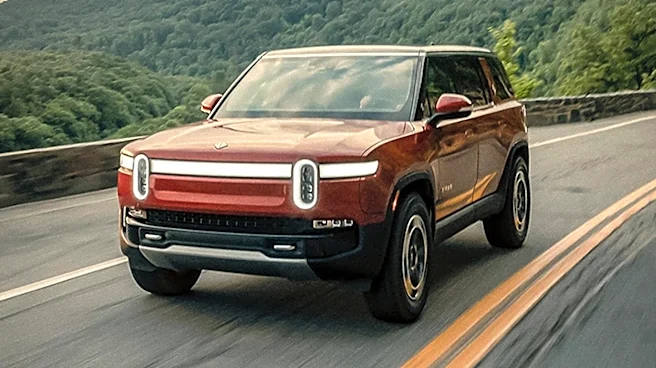
Rivian's reliance on regulatory credits for revenue growth highlights the challenges the company faces in achieving sustainable profitability. The absence of these credits in the latter half of 2026 could exacerbate financial pressures, especially as the company ramps up production of its R2 model. Investors are concerned about Rivian's ability to generate consistent profits without external financial aids. The company's future performance will depend on its ability to scale production efficiently and manage costs, particularly as it aims to increase deliveries significantly in the coming quarters.
What's Next?
Rivian plans to increase production with a second shift at its Illinois plant, aiming for 65,000 to 70,000 deliveries in 2026. The success of this ramp-up will be critical in offsetting the loss of regulatory credits and achieving positive gross profit from the R2 model. Investors will be closely monitoring the company's Q4 2026 performance, which is expected to test its ability to meet these targets. The outcome will significantly influence market confidence and Rivian's stock valuation.