




What's Happening?
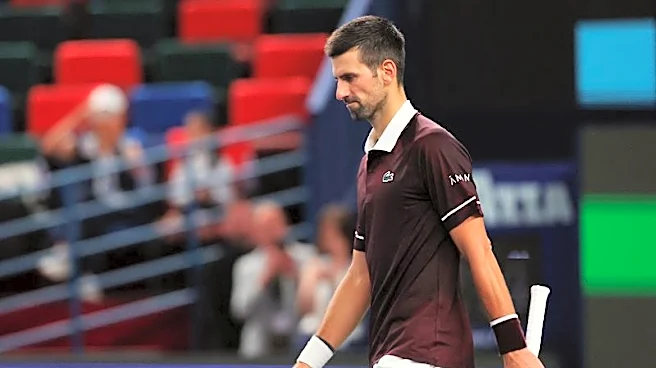
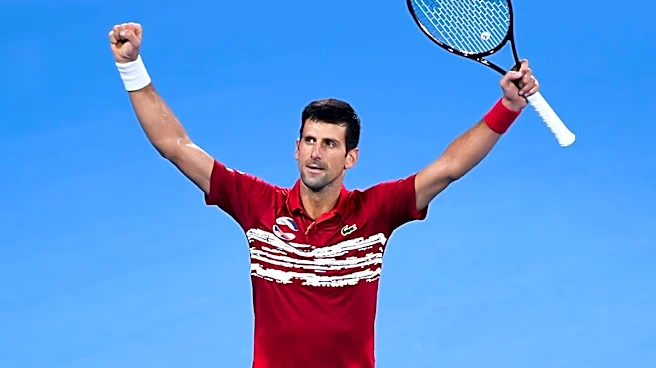
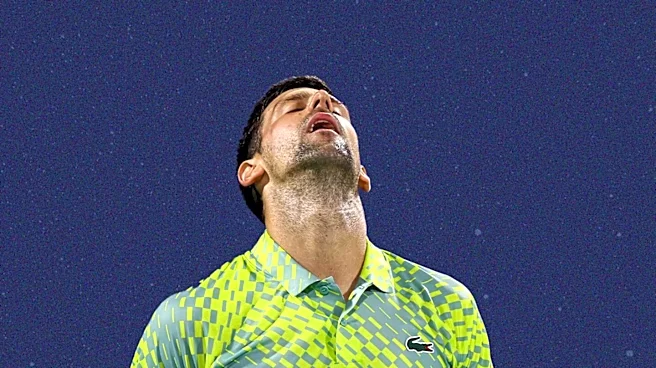
Renowned tennis coach Rick Macci has lauded Novak Djokovic, labeling him the 'GOAT' (Greatest Of All Time) in tennis, primarily due to his exceptional mental strength and self-control. Macci, who previously coached Venus and Serena Williams, emphasized
that Djokovic has mastered the mental aspect of the sport more effectively than any other player. Despite physical struggles at 39 years old in 2026, Djokovic continues to compete at the highest level, a testament to his psychological resilience. Macci highlighted Djokovic's ability to 'remember to forget' and radically turn situations around during matches. This mental prowess, according to Macci, sets Djokovic apart, even placing him slightly above Rafa Nadal in terms of mental fortitude, a quality often attributed to Nadal. Djokovic's career has been marked by overcoming challenges, including being perceived as an outsider in the Federer-Nadal rivalry, yet he persevered to surpass them.
Why It's Important?
Macci's assessment underscores the critical role of mental resilience in elite sports, particularly in tennis, where individual performance under pressure is paramount. His comments highlight that while physical prowess is essential, the psychological dimension can be the ultimate differentiator in achieving sustained success and legendary status. For aspiring athletes and coaches, this emphasizes the importance of mental training alongside physical conditioning. Djokovic's career trajectory, as described by Macci, serves as a case study in overcoming adversity and external pressures through sheer mental toughness. This perspective also contributes to the ongoing debate among tennis enthusiasts and analysts regarding what truly defines greatness in the sport, shifting focus beyond just titles and physical ability to the less tangible, yet profoundly impactful, mental game. The recognition from a coach of Macci's caliber further solidifies Djokovic's standing in sports history.
What's Next?
As Novak Djokovic continues his career, despite physical challenges at 39, the focus will likely remain on his ability to leverage his mental strength to compete against younger, physically dominant players. His performances in upcoming tournaments will be closely watched to see if his unparalleled mental game can continue to compensate for any physical decline. The debate about his 'GOAT' status, particularly concerning his mental edge over rivals like Nadal, is expected to persist among fans and experts. Future analyses of Djokovic's matches will likely scrutinize his psychological responses to pressure points, further cementing the narrative of his mental fortitude. His continued presence at the top of the sport will serve as an ongoing example of the enduring power of the mind in athletic competition.
Beyond the Headlines
Macci's insights into Djokovic's mental game extend beyond the tennis court, offering broader implications for understanding human resilience and performance under pressure. The concept of 'remembering to forget' is a powerful psychological tool applicable in various high-stakes environments, from business negotiations to crisis management. Djokovic's journey, enduring public perception as a 'villain' and consistently proving his critics wrong, illustrates the profound impact of internal locus of control and self-belief. This narrative challenges the conventional understanding of heroism in sports, suggesting that greatness can emerge not just from natural talent or popular appeal, but from an unyielding commitment to self-mastery and mental discipline. It highlights the ethical dimension of sports narratives, where athletes often face unfair scrutiny, and how mental fortitude can be a shield against such external pressures, allowing individuals to define their own success.