


What's Happening?
Bally's Corp. has announced a change in its financial leadership, appointing President George Papanier as interim Chief Financial Officer, effective September 4. This move follows the resignation of Mira Mircheva, who is stepping down for personal reasons
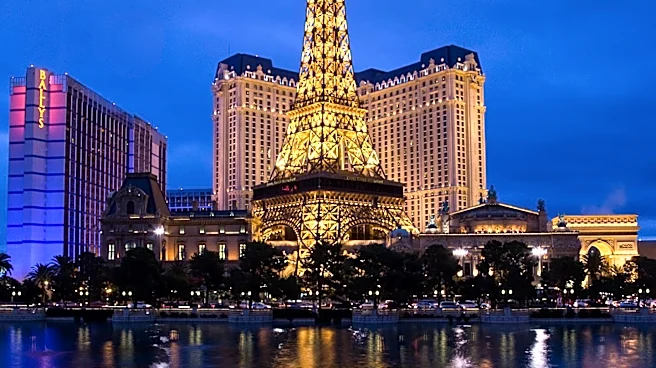
but will remain with the company until September 30 to facilitate a smooth transition. Papanier will continue in his roles as Bally's president and a member of its board. He brings over 40 years of gaming industry experience, having previously served as the company's president and CEO from 2011 to 2021, and had a prior stint as interim CFO in 2023. This leadership change occurs as Bally's progresses with its significant mixed-use development plans surrounding the Athletics' under-construction Las Vegas ballpark on the 26-acre former Tropicana Las Vegas site. Clark County commissioners recently approved land-use entitlements for initial phases of this development, including a mixed-use podium, parking, and a 2,500-seat theater, with a hotel-casino planned for a later phase.
Why It's Important?
The appointment of an interim CFO during a critical development phase for Bally's Corp. in Las Vegas underscores the company's commitment to maintaining financial stability and strategic oversight. The Las Vegas project, centered around the Athletics' $2 billion ballpark, represents a substantial investment and a pivotal expansion for Bally's. Effective financial leadership is crucial for managing the complex funding, budgeting, and regulatory aspects of such a large-scale undertaking. George Papanier's extensive experience in the gaming industry and his previous leadership roles within Bally's suggest a focus on continuity and leveraging internal expertise during this transition. The success of this development could significantly impact Bally's market position and revenue streams, while also contributing to the economic landscape of Las Vegas. The project's progress, including the approval of land-use entitlements, indicates forward momentum, but questions remain about Bally's long-term role, as an unnamed group has expressed interest in potentially acquiring the planned $1.1 billion project.
What's Next?
Bally's Corp. will be actively searching for a permanent Chief Financial Officer to lead its financial operations. The interim period with George Papanier will focus on ensuring continuity and stability as the company navigates the ongoing development of its Las Vegas project. The next key step for the Las Vegas development involves the consideration of permits for the hotel-casino phase by Clark County commissioners on September 16. The company's ability to secure these permits and manage the construction phases will be critical. Furthermore, the expressed interest from an unnamed group in acquiring Bally's planned project adds an element of uncertainty, suggesting potential future changes in ownership or development strategy. Bally's will need to address these external interests while continuing to execute its current plans. The company's financial performance and strategic decisions during this period will be closely watched by investors, industry analysts, and local stakeholders in Las Vegas.
Beyond the Headlines
The leadership transition at Bally's Corp. and the ambitious Las Vegas development project highlight broader trends in the U.S. gaming and entertainment industry. The integration of sports venues with large-scale mixed-use developments, including casinos, hotels, and entertainment facilities, represents a growing strategy to create comprehensive destination experiences. This approach aims to diversify revenue streams beyond traditional gambling, attracting a wider demographic and enhancing urban development. The project also reflects the competitive nature of the Las Vegas market, where companies are constantly innovating to capture market share and adapt to evolving consumer preferences. The potential for an acquisition of Bally's project by another entity underscores the dynamic M&A landscape within the industry, driven by strategic positioning and asset consolidation. This development could set a precedent for future urban planning and economic growth models in other major U.S. cities, blending sports, entertainment, and hospitality into integrated economic hubs.