







What's Happening?
On December 9, the North American trading session will experience significant macroeconomic events, starting with the Bank of Canada's (BoC) monetary policy decision at 09:45 ET, followed by the Federal Open Market Committee (FOMC) policy statement and
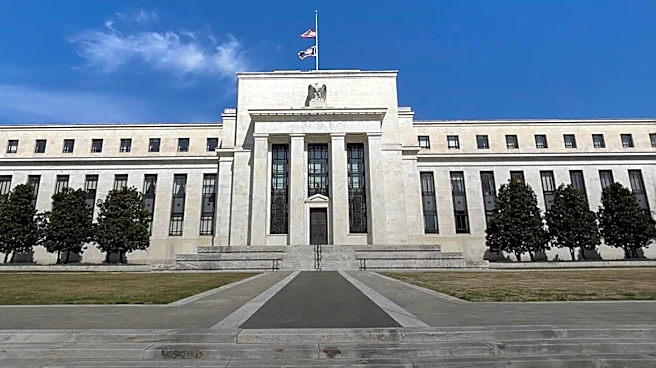
Summary of Economic Projections (SEP) at 14:00 ET. Thirty minutes later, at 14:30 ET, Federal Reserve Chairman Jerome Powell will hold a press conference. This sequence creates a unique trading environment, particularly for the USD/CAD currency pair, which will face two distinct waves of volatility. The BoC's decision, presented as a simple communiqué without new growth and inflation projections, will be followed by the Federal Reserve's comprehensive quarterly publications, including updated GDP forecasts, inflation indicators, and the 'dot plot' illustrating committee members' interest rate expectations. The market anticipates that the Federal Reserve's announcements and Chairman Powell's tone will ultimately overshadow any domestic Canadian factors, dictating the daily close for the USD/CAD.
Why It's Important?
The simultaneous announcements from two major central banks, especially with the Federal Reserve's comprehensive data release, create a high-risk, high-reward scenario for currency traders. The U.S. dollar's status as a global reserve currency means that the Federal Reserve's policy decisions, particularly those communicated by Chairman Jerome Powell, will have a dominant impact on the USD/CAD pair. A 'dovish' stance from the Fed could lead to a significant depreciation of the dollar, while fewer rate cuts than anticipated by the market could cause it to surge. This dynamic can invalidate earlier trends set by the BoC's announcement, leading to 'whipsaws' that trigger stop-loss orders. The persistent 150-basis-point interest rate differential between the Federal Funds rate (4.00%) and the Bank of Canada's overnight rate (2.50%) provides a structural premium for holding long positions on USD/CAD, influencing institutional capital flows and carry trade strategies.
What's Next?
Traders are advised to exercise extreme caution and precision in timing their trades on December 9. The initial volatility following the BoC's decision is expected to be short-lived, with institutional players likely to close out early positions before the Federal Reserve's announcements. The period between 11:30 ET and 13:30 ET is anticipated to be a 'liquidity desert,' characterized by low trading volume and erratic price movements, making it a dangerous time for trading. The true institutional trend for USD/CAD is expected to emerge after 15:30 ET, once major market participants have fully processed the Federal Reserve's official projections and Chairman Powell's press conference. The market will closely scrutinize the 'dot plot' for clues on future rate cuts and Chairman Powell's commentary for any shifts in monetary policy outlook.
Beyond the Headlines
The convergence of these central bank announcements highlights the interconnectedness of global financial markets and the outsized influence of the U.S. Federal Reserve. The event underscores the challenges faced by traders in navigating periods of high uncertainty and fragmented liquidity. The differing levels of transparency and detail in the BoC's simple communiqué versus the FOMC's comprehensive quarterly report also reveal varying approaches to central bank communication, which can significantly impact market reactions. Furthermore, the sustained interest rate differential between the U.S. and Canada reflects broader macroeconomic divergences and policy stances, influencing not only short-term trading strategies but also longer-term investment decisions and capital allocation across North American markets.