






What's Happening?
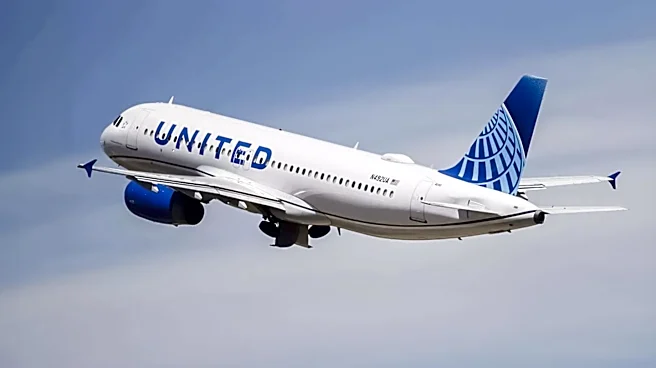
United Airlines and Virgin Atlantic have reported significant success with the implementation of Starlink Wi-Fi on their aircraft. United has equipped over 400 planes with Starlink, with plans to expand to nearly 1,000 by the end of the year. The airline
has noted a substantial increase in Wi-Fi satisfaction scores, more than doubling those of non-Starlink equipped aircraft. Virgin Atlantic has also seen a dramatic rise in customer satisfaction, with 75% of passengers on A350 flights using the service. The high-speed, low-latency internet provided by Starlink has been a game-changer, offering download speeds up to 250 mbps and significantly improving the in-flight experience for passengers.
Why It's Important?
The adoption of Starlink Wi-Fi by major airlines like United and Virgin Atlantic represents a significant advancement in in-flight connectivity, which is increasingly important for business travelers and tech-savvy passengers. This development could set a new standard for in-flight internet services, pushing other airlines to upgrade their offerings to remain competitive. The ability to provide reliable, high-speed internet on flights enhances the overall passenger experience and could influence customer loyalty and airline choice. As airlines continue to integrate advanced technologies, the industry may see a shift towards more tech-driven services, impacting how airlines market themselves and attract customers.
What's Next?
Both United and Virgin Atlantic plan to continue expanding Starlink Wi-Fi across their fleets, with full implementation expected by 2027. This expansion will likely increase pressure on other airlines to adopt similar technologies to meet passenger expectations. The challenge remains in effectively marketing and monetizing this service, as current offerings are often tied to loyalty programs. Airlines may need to develop new strategies to capitalize on this technological advantage, potentially offering it as a premium service or integrating it into ticket pricing. The success of these initiatives could reshape the competitive landscape of the airline industry.