






What's Happening?
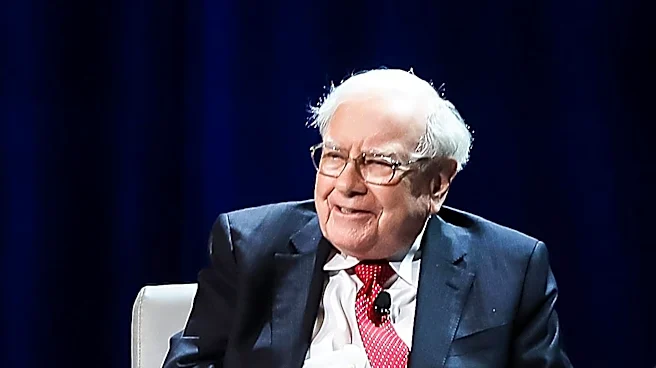
In 1961, Donald and Mildred Othmer, a chemical engineer and a former teacher from Omaha, each invested $25,000 with their friend Warren Buffett. This initial investment, totaling $50,000, was left untouched for decades. When the partnership dissolved
in 1970, the couple received approximately 14,500 shares of Berkshire Hathaway. By the time Donald Othmer passed away in 1995, his shares were valued at around $210 million. Mildred Othmer, who died in 1998, held shares worth $578 million. Their combined estates, primarily from this single investment, grew to more than $750 million, with some reports indicating figures between $780 million and $800 million. Warren Buffett noted that the investment 'never changed their lives,' as they lived comfortably but not ostentatiously and rarely discussed their wealth. The Othmers' story highlights the power of long-term, patient investing, a cornerstone of Buffett's philosophy.
Why It's Important?
The Othmer family's investment journey with Warren Buffett underscores the profound impact of long-term value investing and patience in wealth creation. Their story serves as a real-world illustration of how a relatively modest initial sum, when invested wisely and left undisturbed over several decades, can generate extraordinary returns. This case study reinforces Warren Buffett's consistent advice to focus on fundamental value and avoid frequent trading, contrasting with the speculative tendencies often seen in financial markets. It demonstrates that significant wealth can be accumulated through disciplined, long-term holdings in strong companies, rather than through active market timing. The Othmers' experience also highlights the potential for substantial philanthropic contributions, as nearly all of their accumulated wealth was directed to various charities, including educational and healthcare institutions, showcasing the broader societal benefits that can arise from successful long-term investment strategies.
What's Next?
The legacy of the Othmer investment continues to be observed through the performance of Berkshire Hathaway. As Greg Abel has succeeded Warren Buffett as CEO, investors are now watching to see if the company can maintain its trajectory of value creation. The Othmer's story, particularly the significant philanthropic distribution of their wealth, may inspire other high-net-worth individuals to consider similar long-term investment and charitable giving strategies. The ongoing discussion around Berkshire Hathaway's leadership transition and its future performance will likely continue to reference the foundational principles exemplified by early investors like the Othmers. The impact of their donations on institutions like the Polytechnic Institute of Brooklyn and Long Island College Hospital, despite the latter's eventual closure, will remain a point of analysis regarding the effectiveness and longevity of large endowments.
Beyond the Headlines
The Othmer family's story transcends mere financial success, offering deeper insights into the nature of wealth, philanthropy, and personal values. Their decision to live modestly despite immense wealth challenges conventional notions of affluence and consumption, emphasizing that true value can be found beyond material possessions. The eventual distribution of their fortune to charitable causes, particularly in education and healthcare, highlights the ethical dimension of wealth accumulation and its potential for significant societal good. However, the case of Long Island College Hospital, where a substantial endowment was ultimately depleted despite the Othmers' intentions, raises critical questions about the long-term stewardship of philanthropic funds and the challenges institutions face in preserving such legacies. This aspect of the story prompts reflection on the responsibilities of both donors and recipients in ensuring that charitable contributions achieve their intended, lasting impact, even in the face of unforeseen circumstances and changing economic landscapes.