






What's Happening?
Eli Lilly (LLY) announced robust third-quarter results, with revenue surging by 39% to $24.4 billion, significantly surpassing Wall Street's expectations of approximately $22.6 billion. This strong performance led to an 11% increase in the company's stock
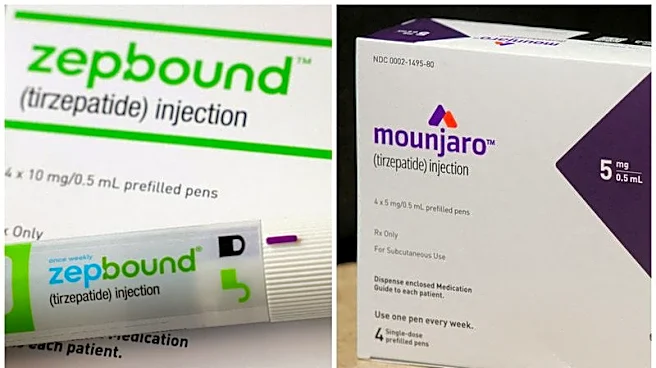
price, reaching $1,418. The growth was primarily driven by the success of its diabetes and weight-loss drugs, Mounjaro and Zepbound, which collectively generated about $16.1 billion in sales. Mounjaro's sales rose by 65% to $10.72 billion, while Zepbound climbed by 49% to $5.35 billion. Additionally, Eli Lilly's next-generation drug, retatrutide, demonstrated superiority over Novo Nordisk's Ozempic in a Phase 3 trial for type 2 diabetes. CEO David Ricks stated that the quarter's results exceeded prior expectations, prompting the company to raise its full-year outlook. Despite a 7% decline in U.S. realized prices, increased patient volume contributed to the overall revenue growth. The company also raised its 2026 revenue guidance to $91 billion to $92 billion, up from $85 billion to $87 billion.
Why It's Important?
Eli Lilly's exceptional Q3 performance and optimistic outlook underscore its dominant position in the rapidly expanding diabetes and obesity drug market. The strong sales of Mounjaro and Zepbound highlight the significant demand for effective treatments in these areas, positioning Eli Lilly as a key player in addressing major public health challenges. The successful head-to-head trial of retatrutide against Ozempic signals a potential shift in market leadership within the diabetes treatment landscape, directly impacting competitor Novo Nordisk. This success could lead to increased market share for Eli Lilly and further solidify its pipeline. The company's ability to achieve substantial revenue growth despite price declines in the U.S. indicates a robust demand-driven model, where volume outweighs pricing pressures. This trend is crucial for investors and the pharmaceutical industry, as it demonstrates the potential for sustained growth even in a cost-conscious healthcare environment. The raised revenue guidance also reflects strong confidence from management in continued product uptake and pipeline strength, which could influence investment decisions across the biotech sector.
What's Next?
Eli Lilly's next significant checkpoint will be its fourth-quarter report, anticipated around February 5. This report will provide crucial insights into the continued rollout and adoption of Foundayo, its oral GLP-1 drug, and whether its ramp-up accelerates as expected. Investors and analysts will also closely monitor U.S. price erosion to determine if it remains near the 7% observed in Q3 or if there are further fluctuations. The company's stock currently trades above the Street's average price target, suggesting that future performance will need to consistently meet or exceed high expectations to maintain investor confidence. Continued expansion of access, particularly through programs like Medicare's pilot for obesity drugs, will be vital for sustaining volume growth. Any updates on clinical trials for pipeline drugs, especially those in late stages, will also be critical for future growth projections and market positioning. The competitive landscape with Novo Nordisk will remain a key area of focus, with both companies vying for market dominance in diabetes and weight management.
Beyond the Headlines
Eli Lilly's success in the diabetes and obesity market extends beyond financial metrics, touching upon broader societal and healthcare implications. The increasing availability and efficacy of drugs like Mounjaro and Zepbound could significantly impact public health outcomes by offering more effective management of chronic conditions that affect millions of Americans. The competitive dynamic with Novo Nordisk is driving innovation, potentially leading to even more advanced treatments and improved patient care. However, the high cost of these medications and the ongoing debate around drug pricing, particularly with Medicare pricing pressures, highlight ethical and accessibility challenges. While increased volume at lower prices is a positive trend for the company, ensuring equitable access for all eligible patients remains a critical public policy concern. The development of next-generation drugs like retatrutide also signals a long-term shift towards more potent and targeted therapies, which could redefine treatment paradigms for metabolic diseases and potentially reduce the burden on healthcare systems in the long run.