






What's Happening?
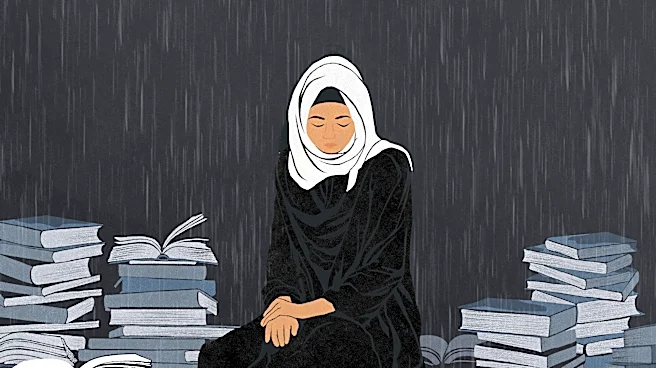
Kate McLoughlin's book 'Silence: A Literary History' delves into the multifaceted nature of silence throughout history, from ancient times to the Covid-19 pandemic. The book examines various forms of silence, including those born from political upheaval,
protest, and personal reflection. McLoughlin explores how silence has been used as a tool for both oppression and empowerment, highlighting its role in historical and contemporary contexts. The book also touches on the cultural and emotional dimensions of silence, offering insights into its impact on society and individual experiences.
Why It's Important?
McLoughlin's exploration of silence provides a unique lens through which to understand historical and modern societal dynamics. By examining silence in various contexts, the book sheds light on how it can be both a form of resistance and a means of control. This analysis is particularly relevant in today's world, where political and social movements often use silence as a form of protest. Understanding the power and implications of silence can inform discussions on civil rights, mental health, and cultural expression, offering a deeper appreciation of its role in shaping human experiences.
Beyond the Headlines
The book's examination of silence extends beyond its immediate implications, prompting readers to consider its ethical and cultural dimensions. McLoughlin's work encourages reflection on how silence can foster attentiveness to non-human life and environmental concerns. The book also highlights the potential for silence to challenge conventional narratives and provoke critical thinking. By exploring the diverse manifestations of silence, McLoughlin invites readers to reconsider its significance in personal and collective contexts, offering a nuanced perspective on its role in shaping societal norms and values.