








What's Happening?
The freight forwarding industry is undergoing a significant transformation, moving beyond simple goods transportation to orchestrating resilient supply networks capable of withstanding global disruptions. According to D. Perdereau, International Transport
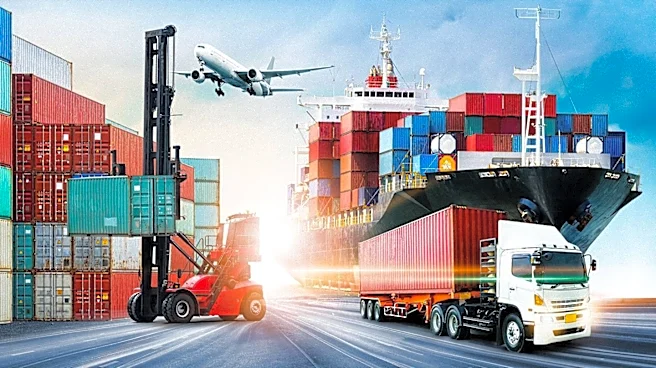
Department Director at FM Logistic, the Russia-Ukraine war and other geopolitical conflicts have highlighted the critical need for greater resilience in logistics services. This requires agility, enabling rapid switching between different modes of transportation. Modern logistics now demands accurate, real-time data, aggregated from Warehouse Management Systems (WMS), Transportation Management Systems (TMS), and incoming tenders, to coordinate immediate pivots with total operational visibility. The integration of Artificial Intelligence (AI) is crucial for eliminating blind spots and adjusting logistics accordingly. This shift emphasizes the importance of multimodal operational agility, combining land, sea, and air solutions to overcome challenges like sudden airspace closures or new sanctions.
Why It's Important?
This evolution in freight forwarding is vital for businesses operating in an increasingly unpredictable global environment. The ability to adapt quickly to disruptions, such as those caused by geopolitical events, directly impacts supply chain continuity and competitive advantage. Companies that can leverage advanced logistics solutions, including real-time data and AI, will be better positioned to maintain operations, reduce risks, and ensure timely delivery of goods. This is particularly critical for high-value goods and those crossing complex or high-risk territories, where secure handling, storage, and adaptable transport options are paramount. The emphasis on robust security protocols, such as TAPA-certified parking facilities and 24/7 tracking, reflects the heightened need to protect cargo and prevent theft in volatile regions. This strategic shift also influences investment in technology and infrastructure within the logistics sector, driving innovation in data analytics and multimodal transport capabilities.
What's Next?
The future of freight forwarding will likely see continued investment in digital solutions and multimodal networks to enhance resilience and visibility. Logistics providers will increasingly focus on integrating advanced technologies like AI to predict and mitigate disruptions, optimize routes, and manage complex regulatory requirements. The demand for tailored logistics solutions that can adapt to specific client needs, such as those for luxury brands requiring strict lead times, will grow. Furthermore, there will be a stronger emphasis on sustainability, with clients increasingly seeking green logistics options and precise emissions reporting. This will drive the adoption of more environmentally friendly transport methods, such as increased use of rail for long distances and electric transport options. The industry will also need to address the challenges of integrating diverse payment systems and exploring technologies like blockchain and tokenization to streamline cross-border transactions and improve efficiency.
Beyond the Headlines
The transformation of the freight forwarding industry reflects a broader societal and economic trend towards greater preparedness for 'black swan' events. The shift from reactive resilience to proactive robustness in supply chain management indicates a fundamental change in how businesses perceive and manage risk. This has implications for international trade policies, as governments may increasingly prioritize the security and reliability of supply chains over purely cost-driven considerations. The ethical dimension of ensuring secure and compliant transport in conflict zones, while also addressing environmental concerns, adds another layer of complexity. The reliance on advanced data analytics and AI also raises questions about data privacy, cybersecurity, and the potential for algorithmic biases in logistics decision-making. Ultimately, this evolution points to a future where supply chains are not just efficient but also inherently adaptable, transparent, and responsible.