






What's Happening?
Leopold Aschenbrenner, a former OpenAI researcher, has experienced significant losses with his hedge fund, Situational Awareness, due to a recent selloff in AI stocks. The fund, which had previously seen substantial gains, was forced to sell a portion
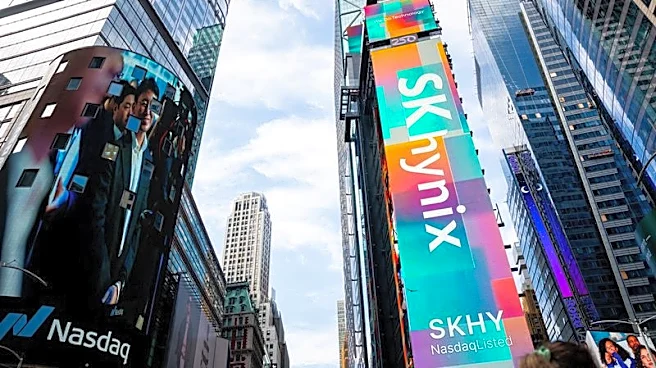
of its public stock portfolio to Ken Griffin's Citadel. This selloff was triggered by heavy selling of memory-chip stocks in South Korea, leading to margin calls and a cycle of forced selling. Aschenbrenner's fund, which focused on AI-related investments, was caught in this downturn, highlighting the risks of leveraging in volatile markets.
Why It's Important?
The situation underscores the volatility and risks associated with investing in AI stocks, even for those with deep industry knowledge. Aschenbrenner's experience reflects a broader trend where market dynamics can override sound investment theses, particularly when leverage is involved. This event serves as a cautionary tale for investors, emphasizing the importance of risk management and the potential pitfalls of overconfidence in market predictions. The forced sale to Citadel also indicates a shift in market sentiment, as investors reassess the sustainability of AI-driven stock valuations.
What's Next?
Following the acquisition of Situational Awareness' public portfolio by Citadel, there may be a stabilization in AI stock prices as one of the major forced sellers exits the market. This could lead to a recovery in some AI-related stocks, as seen with the rally in companies like Sandisk and Nebius. However, the broader implications for AI investments remain uncertain, as market participants continue to evaluate the long-term viability of AI-driven growth. Investors and hedge funds may adopt more cautious strategies, focusing on diversification and reduced leverage to mitigate future risks.