



What's Happening?
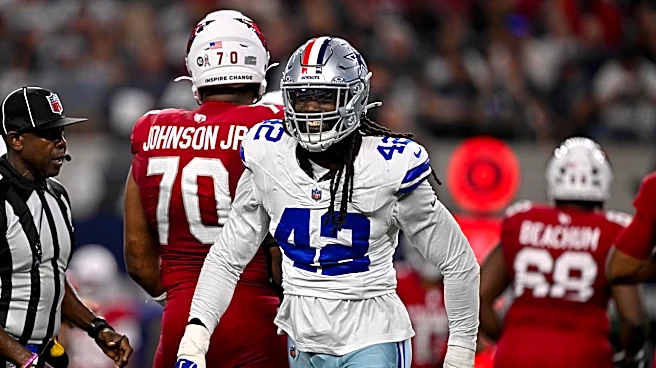
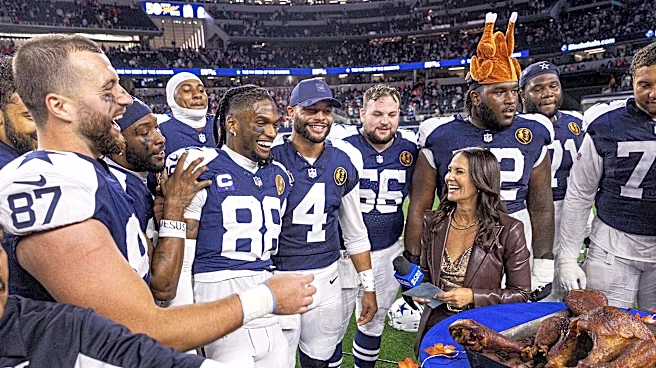
Marshawn Kneeland, a former defensive end for the Dallas Cowboys, was diagnosed with stage 1 chronic traumatic encephalopathy (CTE) after his death by suicide at age 24. The diagnosis was made by Boston University's CTE Center, as reported by the Concussion
and CTE Foundation. Kneeland had been involved in football since childhood and was in his second season with the Cowboys. His death followed a police pursuit in Frisco, Texas, where he was found deceased from a self-inflicted gunshot wound. The diagnosis adds to the list of NFL players found to have CTE, a disease linked to repeated head trauma.
Why It's Important?
Kneeland's diagnosis underscores the serious risks associated with contact sports like football, where repeated head injuries can lead to CTE, a condition that affects brain function and behavior. This case highlights the urgent need for the NFL and other sports organizations to address player safety and mental health more effectively. The growing number of CTE cases among young athletes raises questions about the adequacy of current safety measures and the long-term health implications for players. It also emphasizes the importance of ongoing research into CTE and the development of diagnostic tools for living individuals.
What's Next?
The NFL and other sports bodies may face increased scrutiny and calls for reform in player safety protocols. There could be a push for more comprehensive mental health support systems for athletes, as well as advancements in protective gear and rule changes to minimize head injuries. The case may also drive further research into CTE, aiming to find ways to diagnose and treat the disease before it leads to severe consequences. Public awareness campaigns could be launched to educate athletes and the general public about the risks of CTE and the importance of early intervention.