





What's Happening?
HelloNation has published an article featuring insights from landscaping expert Kyle Swanson of Above & Beyond Lawn & Landscaping in Pueblo, CO, on how to effectively plan an outdoor living space. The article emphasizes that the process should begin by
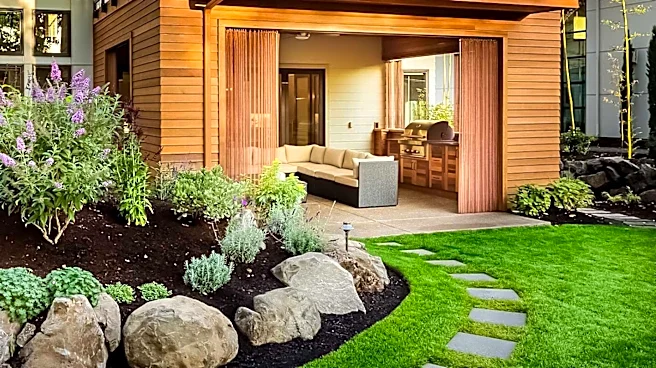
identifying the intended uses for the backyard, such as dining, cooking, gardening, relaxing, or entertaining. Establishing these priorities provides a clear purpose for the project. Design considerations should include how different activities connect across the property, suggesting that an outdoor kitchen might be best near the house and dining area, while a quieter seating area could be located further away. This approach helps prevent crowded spaces and awkward traffic patterns. Walkways are also highlighted as crucial for functional backyard design, ensuring comfortable movement between various areas like doors, patios, cooking spaces, seating, gardens, and gates. Clear pathways facilitate the integration of different yard sections and support safe, convenient movement. Existing property conditions, including sun exposure, drainage, slopes, trees, property lines, and views, are noted as factors that can influence landscape design before construction begins. Shade elements like trees, pergolas, or covered patios are recommended to enhance comfort in gathering areas.
Why It's Important?
The guidance provided by Kyle Swanson is important for U.S. homeowners and the landscaping industry as it offers a structured approach to outdoor living space design, which can significantly impact property value, homeowner satisfaction, and the efficiency of construction projects. By prioritizing intended uses and considering the flow of activities, homeowners can create more functional and enjoyable outdoor environments, reducing the likelihood of costly redesigns or underutilized spaces. The emphasis on existing property conditions, such as drainage and sun exposure, underscores the importance of sustainable and practical design that accounts for local environmental factors. This not only benefits individual homeowners by preventing issues like water damage or uncomfortable outdoor areas but also promotes best practices within the landscaping and construction sectors. For businesses in these industries, adopting such a comprehensive planning methodology can lead to higher client satisfaction, more efficient project execution, and a stronger reputation for delivering well-designed, durable outdoor solutions. The focus on future needs also encourages long-term planning, which can save homeowners money and effort by making future additions easier to integrate.
What's Next?
Homeowners considering outdoor living space projects are encouraged to apply these planning principles, starting with a clear definition of their backyard's intended uses. This initial step will guide subsequent design decisions, including the placement of key features like outdoor kitchens, dining areas, and seating. Future steps will involve careful consideration of materials for patios and walkways, balancing appearance, maintenance, climate suitability, and expected use. The article also suggests that homeowners should plan for potential future additions, such as larger patios or fire features, by leaving appropriate space during the initial design phase. This forward-thinking approach can make subsequent enhancements easier to incorporate into the overall backyard design. Additionally, budget planning is recommended to help homeowners prioritize projects and potentially complete them in phases, ensuring that the outdoor living space evolves in a coordinated manner. Landscaping professionals are likely to continue emphasizing these holistic planning strategies to clients, aiming to create functional and aesthetically pleasing outdoor environments that adapt to changing household needs over time.
Beyond the Headlines
The insights into planning outdoor living spaces extend beyond immediate design choices, touching upon broader lifestyle and environmental implications. The emphasis on creating purposeful zones for different activities reflects a growing trend in U.S. residential design towards maximizing the utility and enjoyment of home spaces, blurring the lines between indoor and outdoor living. This shift can lead to increased social interaction and family bonding, as well as a greater appreciation for nature within the home environment. Environmentally, the consideration of existing property conditions like drainage and sun exposure promotes more sustainable landscaping practices, potentially reducing water waste and energy consumption. The article implicitly encourages a mindful approach to land use, where design is integrated with the natural landscape rather than imposed upon it. Furthermore, the focus on long-term planning and adaptability suggests a move towards more resilient and future-proof home designs, acknowledging that household needs and environmental conditions can change over time. This holistic perspective can foster a deeper connection between homeowners and their outdoor spaces, transforming backyards into dynamic, evolving extensions of their homes.