






What's Happening?
The Zacks Mining - Gold industry is currently navigating significant challenges, including persistent cost inflation, labor constraints, and a retreat in gold prices. Miners are experiencing increased production costs due to a shortage of skilled workers,
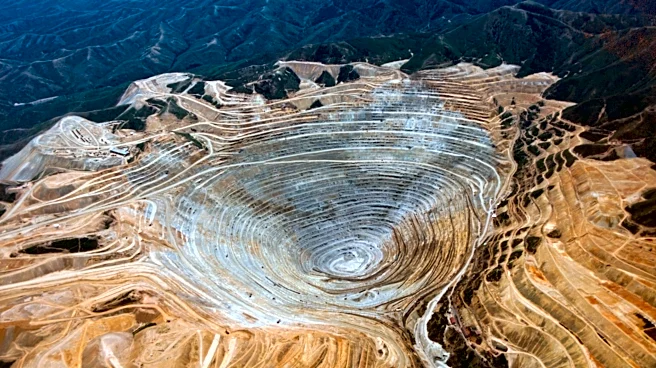
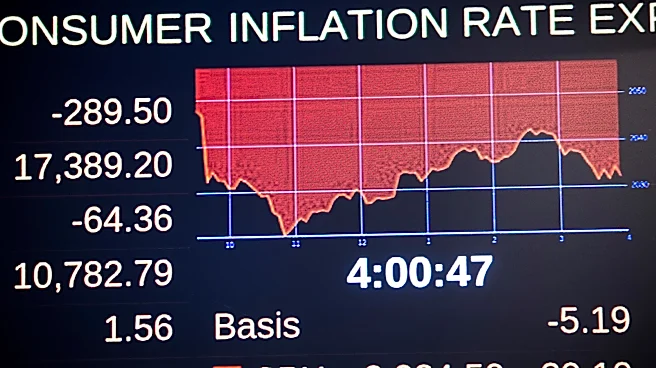
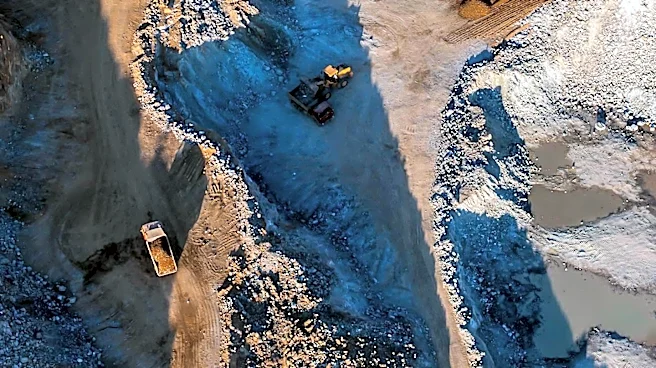
leading to higher wages, and elevated expenses for energy, water, and materials. Gold prices, after reaching a record high of $5,595 per ounce in late January, have since fallen below $4,000 per ounce. This decline is attributed to a strengthening U.S. dollar and expectations of further interest rate hikes by the Federal Reserve, following hotter-than-expected U.S. inflation data. The industry, which primarily involves extracting gold from underground or open-pit mines, is characterized by long and complex processes, often taking 10-20 years for a mine to become productive. Companies are responding by focusing on increasing production, strengthening operating cash flow, lowering unit net cash costs, adopting alternative energy sources, and deploying digital technologies to enhance efficiency. Despite these efforts, the outlook remains challenging due to resource depletion and declining production from mature mines, pointing to a potential supply deficit.
Why It's Important?
The struggles within the gold mining industry have broad implications for the U.S. economy and investment landscape. Gold's role as a safe-haven asset means its price fluctuations can reflect broader economic uncertainties and investor sentiment. A stronger U.S. dollar and hawkish Federal Reserve policies, which are contributing to lower gold prices, indicate a shift in monetary policy that impacts various sectors. For investors, the challenging outlook for gold miners, as indicated by the Zacks Industry Rank, suggests potential volatility and the need for careful consideration of investment strategies. The industry's efforts to mitigate rising costs through technological adoption and alternative energy sources could also drive innovation in mining practices, potentially influencing other resource extraction sectors. Furthermore, the long-term concern of resource depletion and a potential supply deficit could lead to increased geopolitical competition for gold reserves and impact global supply chains for industries that utilize gold.
What's Next?
In response to the ongoing challenges, gold mining companies are expected to continue their focus on operational efficiencies and strategic growth initiatives. Companies like Fury Gold Mines, Gold Royalty, Newmont Mining Corporation, and B2Gold Corp. are highlighted as being well-positioned due to strong balance sheets and growth strategies, including project advancements and acquisitions to replenish reserves. The industry will likely see continued investment in exploration and development of new mines, although major discoveries are becoming scarcer. The adoption of digital technologies and alternative energy sources is anticipated to accelerate as miners seek to reduce costs and improve sustainability. The trajectory of gold prices will largely depend on future U.S. inflation data, the Federal Reserve's interest rate decisions, and the strength of the U.S. dollar. Any shifts in these macroeconomic factors could either alleviate or intensify the pressures currently faced by the gold mining sector.
Beyond the Headlines
Beyond the immediate financial implications, the gold mining industry's challenges highlight broader themes of resource scarcity, environmental sustainability, and technological evolution. The long development cycles of gold mines underscore the significant capital and time investments required, making the industry particularly vulnerable to economic shifts and regulatory changes. The push towards alternative energy sources and digital technologies in mining reflects a wider trend across industrial sectors to reduce environmental impact and enhance operational efficiency. This could lead to the development of more sustainable mining practices and technologies that could be applied to other resource extraction industries. The increasing demand for gold across investment, technology, and healthcare applications, coupled with declining supply, also points to a potential long-term supply-demand imbalance. This imbalance could elevate gold's strategic importance, influencing international trade dynamics and potentially spurring innovation in recycling and alternative material development.