




What's Happening?
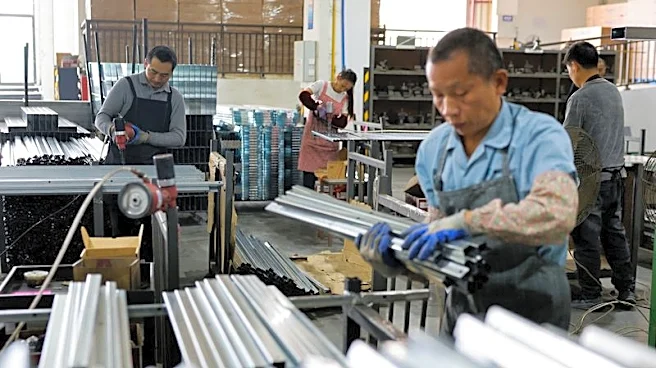
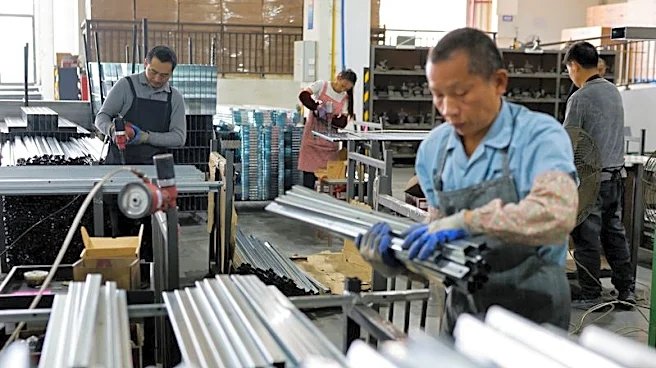
China's economy experienced a slowdown in October 2026, with several key economic indicators falling below analyst expectations. Retail sales increased by only 0.4% year-on-year, significantly less than the anticipated 0.8% growth. Industrial output also
missed forecasts, growing by 4.8% compared to the projected 5.3%. Furthermore, fixed-asset investment saw an 8.1% decline over the first ten months of the year. This underperformance comes despite recent efforts by Beijing to stimulate the economy through mortgage subsidies and targeted interest rate cuts. The National Bureau of Statistics acknowledged a significant imbalance between strong supply and weak demand domestically, with some businesses facing operational challenges. Investment in real estate development notably fell by 21.6% in the first ten months, and newly built commercial building sales decreased by 14.3%.
Why It's Important?
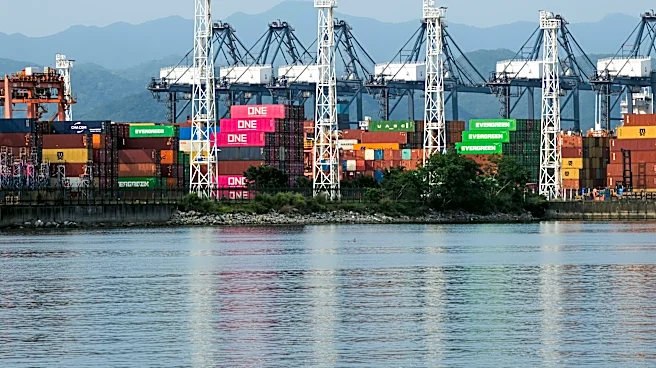
The weaker-than-expected economic performance in China carries significant implications for global markets, including the U.S. A struggling Chinese economy, characterized by weak domestic demand and a troubled real estate sector, can reduce China's appetite for imports, potentially impacting U.S. export-oriented industries. U.S. companies with significant operations or investments in China may face reduced revenue and profitability. The slowdown could also contribute to global economic uncertainty, affecting investor confidence and potentially leading to shifts in international trade policies. While Beijing has implemented stimulus measures, their delayed impact suggests a prolonged period of economic adjustment, which could influence global supply chains and commodity prices, affecting U.S. businesses and consumers.
What's Next?
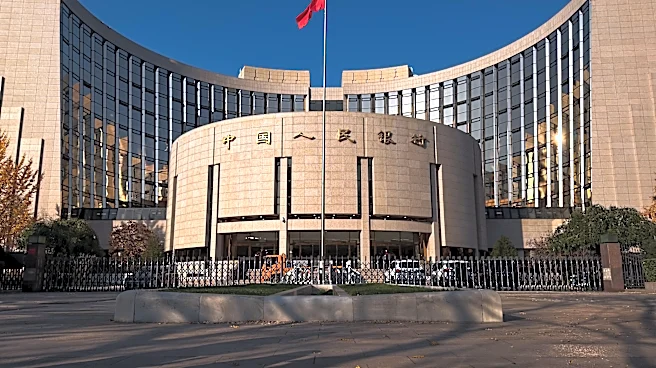
Analysts suggest that the full impact of Beijing's recent stimulus measures, including mortgage subsidies and targeted rate cuts, is yet to be seen. There is an expectation that more policy support might be necessary to bolster the domestic economy. The Chinese government will likely continue to monitor economic data closely and may introduce further interventions to address the imbalance between supply and demand and support struggling enterprises. The performance of the real estate sector will be a critical area to watch, as its continued struggles could further dampen overall economic growth. Future policy decisions from Beijing will be crucial in determining the trajectory of China's economy and its subsequent global economic ripple effects.
Beyond the Headlines
The persistent weakness in China's economy, particularly the real estate sector, highlights deeper structural challenges beyond short-term fluctuations. The government's acknowledgment of an imbalance between supply and demand suggests a need for fundamental economic rebalancing. This situation could prompt a re-evaluation of China's growth model, potentially shifting focus from investment-led growth to more consumption-driven expansion. Such a transition, if it occurs, would have long-term implications for global trade patterns and the international division of labor. The ongoing economic pressures also raise questions about the effectiveness of traditional stimulus measures in addressing complex structural issues, potentially leading to innovative policy approaches in the future.