







What's Happening?
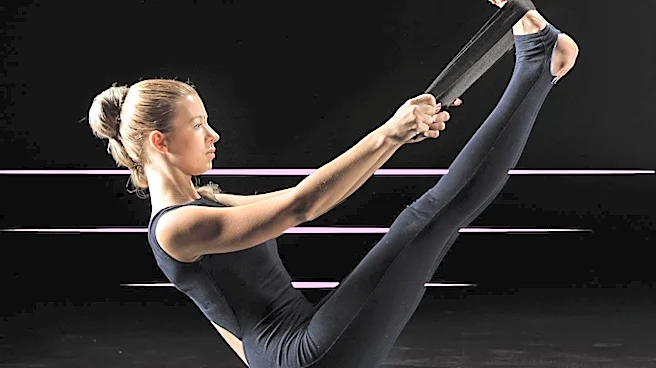
Hugger Mugger, a yoga equipment provider, is highlighting the utility of yoga straps as essential tools for enhancing flexibility, improving alignment, and providing stability in yoga practice. A yoga strap, typically a non-elastic length of durable cotton
or hemp webbing, acts as an extension of the practitioner's limbs, allowing for deeper and safer stretches without compromising spinal integrity. The article details how straps can be used in various poses, such as Seated Forward Fold, Reclined Big Toe Pose, Cow Face Pose, and Dancer's Pose, to extend reach, maintain proper alignment, and stabilize limbs. It also addresses common misconceptions, clarifying that using a strap is a tool for building flexibility correctly, not a sign of weakness.
Why It's Important?
The promotion of yoga straps by Hugger Mugger is significant for the U.S. yoga community and individuals seeking to improve their physical flexibility and alignment. By demystifying the use of props, the company encourages safer and more effective yoga practices, potentially reducing the risk of injury from overstretching or improper form. This is particularly important for beginners or those with limited flexibility, as it makes advanced poses more accessible and fosters a sense of progress. The emphasis on correct alignment can lead to better long-term physical health, preventing chronic pain and improving posture. Furthermore, by challenging the notion that props are for 'less flexible' individuals, it promotes inclusivity and a more supportive environment within the yoga community.
What's Next?
As awareness of the benefits of yoga straps grows, we can expect to see increased adoption of these props in yoga studios and home practices across the U.S. Yoga instructors may integrate strap usage more explicitly into their teaching, offering workshops and classes focused on prop-assisted practice. Manufacturers like Hugger Mugger will likely continue to innovate, offering a wider range of strap lengths, materials, and buckle types to cater to diverse needs. The trend towards personalized and accessible yoga practices will likely drive demand for educational content, such as online tutorials and guides, on how to effectively use straps for various poses and flexibility goals.
Beyond the Headlines
The integration of yoga straps into practice reflects a deeper understanding of individual body mechanics and the principle of 'ahimsa' (non-harming) in yoga. It moves beyond a performance-oriented approach to one that prioritizes safety, longevity, and self-awareness. By allowing practitioners to meet their bodies where they are, straps foster patience and self-compassion, crucial elements for a sustainable and fulfilling yoga journey. This shift can also influence broader fitness trends, encouraging the use of supportive tools to prevent injury and promote gradual, mindful progress, rather than pushing the body beyond its current limits. Ultimately, it contributes to a more inclusive and therapeutic approach to physical activity.