


What's Happening?
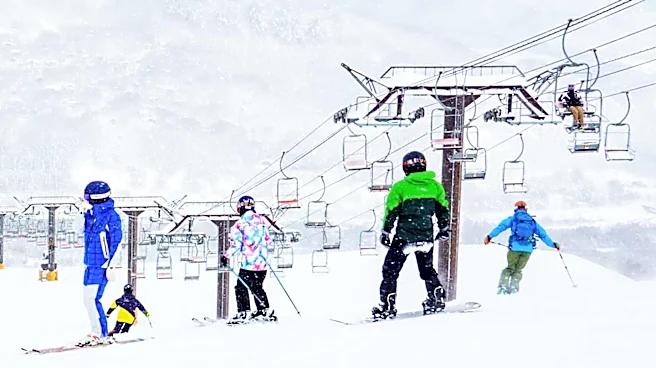
A powerful storm system has delivered significant snowfall across California's Sierra Nevada mountains, providing an early boost to the ski season. Lake Tahoe-area resorts have received substantial snow totals, with Boreal Mountain reporting 52 inches
in 24 hours, Mt. Rose 32-36 inches, Sugar Bowl 34 inches, Palisades Tahoe 25 inches, and Kirkwood 27 inches. Mammoth Mountain also reported 20-32 inches. This early snowfall has prompted several resorts to move their opening dates forward. Palisades Tahoe, originally set to open on November 25, will now open on November 21. Northstar, Heavenly, and Boreal are scheduled to open on November 20, and Kirkwood will open nearly two weeks early on November 23. Another storm system is anticipated to bring additional heavy snowfall to the Sierra early next week, just before Thanksgiving.
Why It's Important?
This early and substantial snowfall is crucial for California's ski industry, especially following a disappointing snow season last winter. The accelerated opening dates and significant snow base are expected to attract more visitors, boosting local economies reliant on winter tourism. Businesses such as hotels, restaurants, and ski rental shops in areas like Lake Tahoe and Mammoth Mountain stand to benefit from the extended season and increased tourist traffic. For skiers and snowboarders, it means an earlier start to recreational activities and potentially better conditions throughout the season. However, the heavy snowfall also presents challenges, including travel disruptions on Interstate 80 and a high avalanche danger warning for the Tahoe backcountry, which could impact accessibility and safety for visitors.
What's Next?
Ski resorts in the Sierra Nevada are preparing for an influx of visitors as they open ahead of schedule, with many gearing up for the Thanksgiving week. Another storm system is forecasted to bring several more feet of snow early next week, which could further enhance conditions but also exacerbate travel challenges. Skiers are advised to monitor road conditions and resort operations closely before traveling. The Sierra Avalanche Center's high avalanche danger warning for the Tahoe backcountry will require continued vigilance and caution from those venturing into uncontrolled areas. Resorts will likely focus on managing the new snow, ensuring safety, and accommodating the early surge of guests.
Beyond the Headlines
The early and intense start to the California ski season highlights the variability of weather patterns and their direct impact on regional economies and recreational activities. While beneficial for the ski industry, such significant early-season storms can also strain local infrastructure and emergency services due to travel disruptions and increased avalanche risk. This event underscores the importance of robust weather forecasting and public safety advisories in mountainous regions. It also provides a stark contrast to recent milder winters, potentially influencing long-term planning for resorts regarding snowmaking investments and climate change adaptation strategies, even as this particular event brings immediate positive outcomes.