





What's Happening?
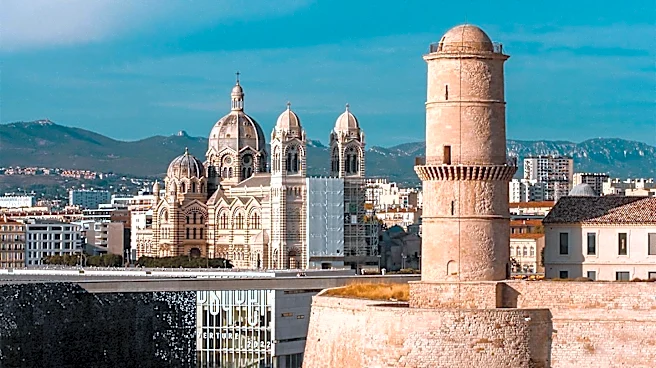
Marseille, France, provides a variety of free walking tours that typically last between 1.5 to 2.25 hours and cover approximately 2.5 kilometers. These tours delve into the city's historic center, with common routes including significant landmarks such
as Fort Saint-Jean, the vestige garden, the Hôtel de Cabre, the Hôtel-Dieu, Cathédrale La Major, and the Mucem. Some tours also extend to areas like Le Panier and the Villa Méditerranée. Guides often customize their routes, but core historical sites are consistently featured. These tours are free, operating on a tip-based system where participants pay their guide at the end of the tour based on their satisfaction. The tours are highly rated, with an average of 4.8 out of 5 stars from over 5,600 reviews, indicating a positive experience for visitors exploring Marseille's rich history and culture.
Why It's Important?
While primarily a local tourism initiative in Marseille, the popularity and structure of these free walking tours highlight a growing trend in the global tourism industry. This model, relying on gratuities rather than upfront fees, makes cultural exploration more accessible to a wider range of travelers, including budget-conscious tourists. For the U.S. tourism sector, this trend suggests a potential shift in consumer expectations towards more flexible and value-driven travel experiences. American cities and tour operators could observe this model to enhance their own offerings, particularly in historical districts, by making guided tours more inclusive and appealing. The high satisfaction rates also underscore the importance of knowledgeable local guides in delivering authentic and engaging experiences, a factor that can significantly influence a destination's appeal.
What's Next?
The continued success of free walking tours in Marseille may encourage other European and international cities, including those in the U.S., to adopt or expand similar models. As travelers increasingly seek authentic and cost-effective ways to experience new destinations, the demand for such tours is likely to grow. Tour operators might explore partnerships with local historians or community groups to enrich the narrative content of these tours, further enhancing their appeal. Additionally, the feedback mechanisms inherent in tip-based systems could lead to continuous improvement in tour quality and guide performance. The model could also inspire innovation in how historical and cultural sites are presented to the public, potentially leading to more interactive and personalized experiences.
Beyond the Headlines
The free walking tour model in Marseille reflects a broader cultural shift towards experiential tourism and the sharing economy. It democratizes access to historical and cultural knowledge, moving away from traditional, often more expensive, tour packages. This approach fosters a direct connection between visitors and local guides, often leading to a more intimate understanding of the city's heritage and contemporary life. Ethically, it places the value of the tour directly in the hands of the participant, promoting a merit-based system for guides. Legally, these tours operate within a flexible framework, relying on individual transactions rather than fixed pricing structures. Culturally, they contribute to a more vibrant street life and encourage exploration of lesser-known areas, enriching the overall visitor experience and potentially boosting local economies through increased foot traffic to small businesses.