








What's Happening?
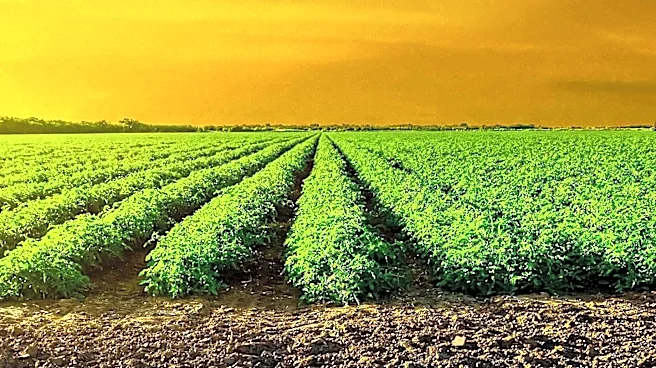
Howard Graham Buffett, son of renowned investor Warren Buffett, has dedicated his career to agriculture and soil conservation, diverging from his father's path in finance. In 1986, Warren Buffett purchased a 400-acre farm in Nebraska for $280,000 from the FDIC
following a collapse in Midwest farmland prices. This property, located approximately 50 miles north of Omaha, was subsequently leased to Howard under a unique rental agreement. The agreement stipulated that Howard would pay 5% annually plus either 22% or 26% of the farm's gross revenue, with the percentage dependent on his weight relative to a 182.5-pound threshold. Howard, who also manages a 1,500-acre farm in Pana, Illinois, has focused on no-till farming, a method that minimizes mechanical soil disturbance. His foundation has also supported research and large-scale trials comparing no-till farming with traditional agricultural practices. Despite his agricultural pursuits, Howard has served on the Berkshire Hathaway board of directors since 1993, and there is speculation about a potential future role as non-executive chairman to preserve the company's culture.
Why It's Important?
This development highlights a significant shift in focus within a prominent American family, moving from traditional finance to sustainable agriculture. Howard G. Buffett's commitment to soil conservation, particularly through no-till farming, underscores a growing awareness and investment in environmentally responsible agricultural practices in the U.S. His work, supported by his foundation, contributes to research and implementation of methods that can reduce fuel consumption and improve soil health, which are critical for long-term food security and environmental sustainability. The unique rental agreement between father and son also offers an interesting insight into personal and financial arrangements within the Buffett family, demonstrating a blend of business acumen and personal interests. Furthermore, Howard's continued involvement with Berkshire Hathaway, even in a non-executive capacity, suggests a desire to maintain the company's foundational values and culture, indicating the enduring influence of Warren Buffett's principles beyond his direct management.
What's Next?
Howard G. Buffett is expected to continue his work in agricultural innovation and soil conservation, potentially expanding his research and advocacy for sustainable farming practices. His role on the Berkshire Hathaway board, and the possibility of becoming a non-executive chairman, suggests he will remain an influential figure in both the agricultural and corporate sectors. As Greg Abel assumes the CEO role at Berkshire Hathaway in 2026, Howard's potential future position as non-executive chairman would focus on upholding the company's culture rather than day-to-day management or investment decisions. This transition could further solidify the long-term vision and values of Berkshire Hathaway, ensuring its continued adherence to the principles established by Warren Buffett. The ongoing research and trials funded by his foundation could also lead to wider adoption of no-till farming and other conservation agriculture techniques across the U.S., influencing national agricultural policies and practices.
Beyond the Headlines
The story of Howard G. Buffett's agricultural endeavors extends beyond mere farming; it represents a broader societal trend towards sustainability and responsible resource management. His focus on soil conservation addresses critical environmental challenges, such as climate change and land degradation, which have long-term implications for global food systems and ecological balance. The contrast between his father's financial empire and his own dedication to the land also highlights differing philosophies on wealth and purpose. While Warren Buffett built immense financial wealth, Howard is investing in natural capital, emphasizing the intrinsic value of healthy ecosystems. This narrative could inspire other prominent families and individuals to leverage their resources for environmental stewardship, fostering a cultural shift towards valuing ecological health alongside economic prosperity. The 'weight-related clause' in the farm lease, while humorous, also subtly reflects a disciplined approach to personal responsibility, a trait often associated with the Buffett family's business ethics.