





What's Happening?
Defense technology company Anduril Industries has vacated its maritime operations at the historic former Foss Maritime shipyard along Seattle’s Lake Washington Ship Canal. This exit comes after the U.S. Navy canceled the specific unmanned vessel acquisition
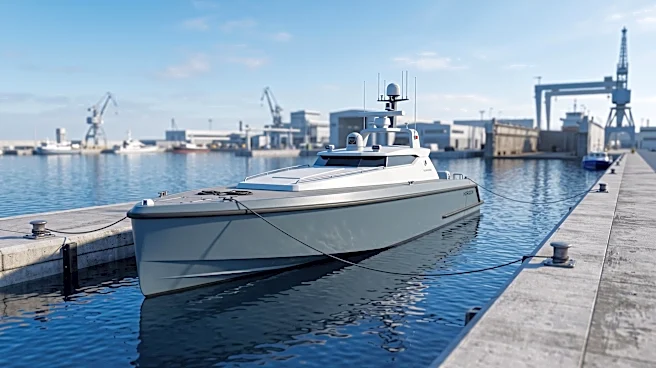
program that Anduril was pursuing at the site. Anduril had established a presence at the shipyard in April, with plans to use it as an initial U.S. hub for low-rate vessel assembly, integration, and testing of Autonomous Surface Vessels (ASVs) for the Navy’s Modular Attack Surface Craft (MASC) program. However, the Navy canceled the MASC initiative in March, replacing it with a new strategy for Medium Unmanned Surface Vessels (MUSVs) that focuses on at-sea demonstrations rather than traditional program competitions. Anduril was not among the seven defense vendors selected for the initial testing phase of the new MUSV program.
Why It's Important?
Anduril's departure from the Seattle shipyard signifies a direct consequence of shifts in U.S. Navy acquisition strategies for unmanned maritime systems. The cancellation of the MASC program and the subsequent omission of Anduril from the initial MUSV testing roster highlight the competitive and evolving landscape of defense technology contracting. For the Seattle region, this means the loss of a potential hub for advanced maritime defense manufacturing, impacting local economic development and specialized job creation in that specific sector. While Anduril's broader presence in Western Washington, including offices in Bellevue and Seattle and a military testing facility in Carnation, continues to grow, the shipyard exit represents a setback for its direct involvement in Navy vessel production in the area. This event underscores the inherent risks and rapid changes within the defense industry, where large investments can be quickly re-evaluated based on government program decisions.
What's Next?
Anduril will likely continue to focus on its expanding engineering footprint in the greater Seattle region, which includes its Bellevue and downtown Seattle offices and its military testing facility in Carnation. The company aims to grow its regional workforce to 1,000 people, concentrating on areas like augmented reality displays, edge computing hardware, and other military technologies. While its direct involvement in Navy vessel production from the Seattle shipyard has ceased, Anduril may still pursue opportunities within the Navy's new MUSV program through other avenues or future solicitations. The Navy's at-sea testing for MUSVs, which began in June and is expected to conclude in October, will determine which companies receive follow-on production contracts, potentially opening doors for other defense contractors. The former Foss Shipyard site will now be available for other maritime or industrial uses.
Beyond the Headlines
This development reflects a broader trend in defense procurement towards more agile and demonstration-based acquisition strategies, moving away from traditional, lengthy program competitions. The Navy's shift to evaluating autonomous vessels through at-sea demonstrations indicates a desire for faster innovation cycles and a focus on proven capabilities rather than theoretical designs. For defense technology companies, this necessitates a flexible and adaptable business model, capable of quickly pivoting to new program requirements and demonstrating real-world performance. The incident also highlights the strategic importance of regional hubs for defense innovation, even as specific projects may shift. While Anduril's maritime ambitions in Seattle were curtailed, its continued investment in other high-tech defense areas in the region suggests a long-term commitment to leveraging the local talent pool and technological ecosystem for national security initiatives.