


What's Happening?
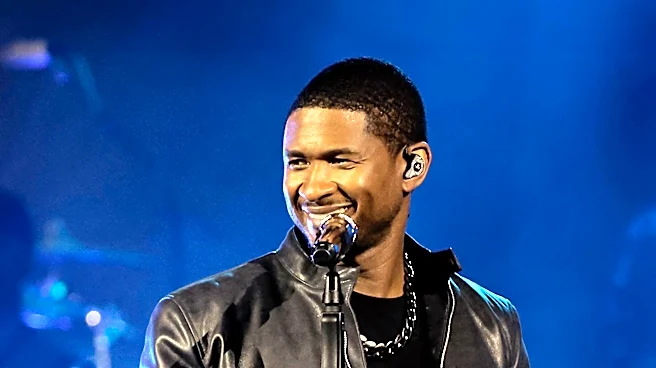
During a recent co-headlining tour stop in Las Vegas with Chris Brown, R&B singer Usher placed a diamond-encrusted crown on his head, declaring himself the 'King of R&B.' This act occurred while he was performing his hit song 'Confessions' and subsequently
sat on a throne. The move ignited significant debate across social media platforms, with fans expressing divided opinions. Some social media users supported Usher's claim, believing he has earned the title, while others argued that different artists hold stronger claims to the 'King of R&B' title. This isn't the first time Usher has made such a claim; he previously stated in a 2022 radio interview that he would 'carry' the title, acknowledging that he stands 'on the shoulders of all of the icons of our time,' including Michael Jackson, James Brown, and Ronald Isley. Fellow R&B artist Ginuwine also publicly supported Usher's claim in a 2024 interview.
Why It's Important?
The self-proclamation by Usher as the 'King of R&B' is important as it sparks a broader cultural conversation about legacy, influence, and the subjective nature of artistic titles within the music industry. Such declarations often ignite passionate debates among fans and artists, highlighting the diverse perspectives on who truly embodies the pinnacle of a genre. This discussion not only engages the public but also serves to re-evaluate the contributions of various artists to R&B music, from historical figures to contemporary stars. For Usher, this move could be seen as a strategic branding effort, reinforcing his status and confidence in his extensive career and impact on the genre. For the music industry, these types of debates generate significant social media engagement and media coverage, contributing to the ongoing narrative and relevance of R&B music. It also underscores how artists leverage their performances and public appearances to shape their own narratives and cement their place in music history.
What's Next?
The debate surrounding Usher's 'King of R&B' claim is likely to continue across social media and music forums, with fans and critics weighing in on his assertion. Other R&B artists may be prompted to offer their opinions, potentially fueling further discussion and even friendly rivalries within the genre. This ongoing conversation could lead to increased attention on Usher's current tour with Chris Brown and his upcoming projects, as audiences re-evaluate his body of work in the context of his self-proclaimed title. The co-headlining tour itself, including upcoming dates at SoFi Stadium, will continue to be a platform where Usher can reinforce his claim through his performances. Historically, similar declarations by artists have often led to sustained public discourse, influencing how their careers are perceived and documented in music history.
Beyond the Headlines
Beyond the immediate fanfare and social media buzz, Usher's declaration taps into a deeper cultural phenomenon within music: the quest for and recognition of 'royalty' within genres. These titles, while unofficial, carry significant weight in shaping an artist's legacy and influence. The debate often reflects generational shifts in musical taste, the impact of different eras of R&B, and the criteria by which artistic greatness is judged—whether it's vocal ability, songwriting, stage presence, commercial success, or longevity. The controversy also highlights the role of social media in amplifying these discussions, allowing a global audience to participate in defining cultural narratives. This ongoing dialogue about who holds the 'crown' in R&B is not just about one artist; it's about the collective memory and appreciation of a genre that has profoundly shaped American music and culture, reflecting evolving standards of excellence and the enduring power of artistic expression.