


What's Happening?
A recent report details the life and career of Jeffrey Craig LaBeouf, father of actor Shia LaBeouf. Jeffrey Craig LaBeouf is identified as a former professional clown, live performer, and Vietnam War veteran. His professional background includes studying
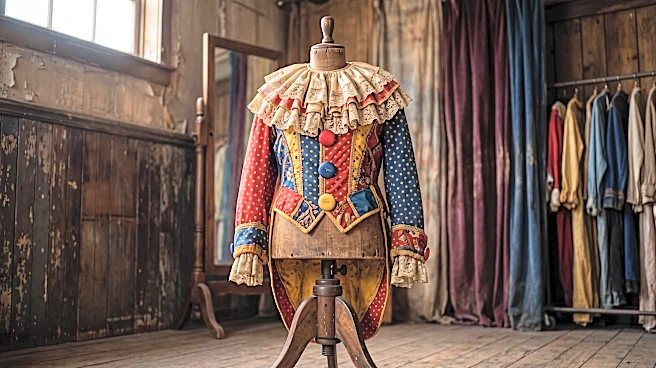
commedia dell’arte in France, performing as a stand-up comedian, and working as a rodeo clown, even opening for the Doobie Brothers. He and Shia's mother, Shayna Saide, were both performers, meeting in Los Angeles where Jeffrey worked as a clown and karate teacher. The family faced financial difficulties in Echo Park, Los Angeles, leading Jeffrey to sell food from a pushcart while performing, with Shayna and young Shia participating. Shia LaBeouf has recalled dressing in clown costumes and helping his parents attract customers from a young age. Jeffrey's military service included three tours in Vietnam, after which he struggled with heroin addiction. His experiences were discussed in a 2019 interview where he reflected on the emotional impact of war.
Why It's Important?
This detailed account of Jeffrey Craig LaBeouf's life offers crucial context to the public understanding of Shia LaBeouf's upbringing and career. Jeffrey's diverse performance background directly influenced Shia's early exposure to entertainment, from street performances to developing stand-up comedy routines and chaperoning his son during his Disney Channel years. The report also highlights the complexities of their relationship, particularly in light of the 2019 film 'Honey Boy,' which was written by Shia LaBeouf and inspired by his father. Shia later clarified that he had exaggerated and fictionalized aspects of his father's behavior in the film, emphasizing the distinction between dramatized storytelling and factual biography. This distinction is vital for audiences and media to accurately interpret public figures' narratives, especially when personal histories are adapted into creative works. Understanding Jeffrey's own perspective, as shared in interviews, provides a more nuanced view beyond the film's portrayal, revealing a history of creative collaboration, personal struggles, and enduring emotional connections.
What's Next?
The ongoing public discussion surrounding Jeffrey Craig LaBeouf and his relationship with Shia LaBeouf is likely to continue influencing how Shia's past and future projects are perceived. Recent allegations made by Shia in July 2026 regarding his father's alleged inappropriate behavior towards female co-stars on film sets indicate that Jeffrey remains a part of conversations about Shia's early Hollywood experiences. These allegations, while not independently verified, suggest that the narrative surrounding their family dynamics may evolve further. Future interviews or public statements from either Jeffrey or Shia could provide additional insights or clarifications, potentially shaping public opinion and media coverage. For the entertainment industry, this situation underscores the complexities of autobiographical storytelling and the ethical considerations involved in portraying real individuals in fictionalized works. Audiences may continue to seek a deeper understanding of the true nature of their relationship as more information emerges or is clarified.
Beyond the Headlines
The narrative surrounding Jeffrey Craig LaBeouf and his son, Shia, delves into profound themes beyond typical celebrity news, touching upon the ethics of autobiographical art and the public's consumption of personal stories. Shia LaBeouf's public admission that he exaggerated aspects of his father's character in 'Honey Boy' raises critical questions about artistic license versus factual representation, especially when the subject is a living individual. This situation highlights the potential for media portrayals to shape public perception of real people, sometimes inaccurately, and the responsibility artists bear in such narratives. Furthermore, Jeffrey's background as a Vietnam War veteran struggling with addiction adds a layer of societal relevance, reflecting broader issues of post-war trauma and its intergenerational impact. The evolving public understanding of their relationship underscores the importance of critical media literacy, urging audiences to differentiate between dramatized accounts and verified facts, and to consider multiple perspectives when engaging with complex personal histories presented in the public sphere.