






What's Happening?
A new report from PwC indicates a significant shift in how public pension funds and sovereign wealth funds are investing, increasingly directing capital towards the physical infrastructure supporting artificial intelligence (AI). These institutions are moving
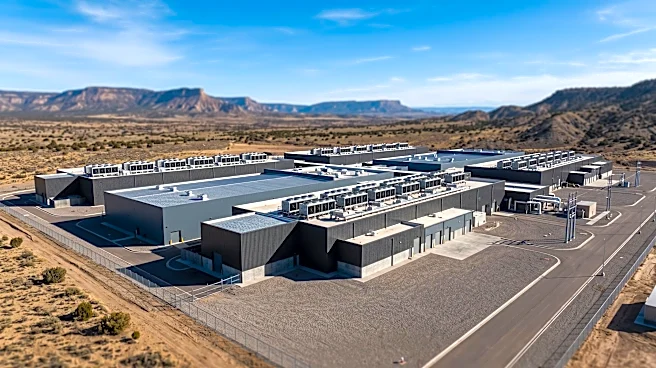
beyond traditional stock market investments to take controlling positions and operational roles in data centers, power systems, and companies that enable AI technology. PwC projects that global public pension assets will reach $36.3 trillion and sovereign wealth assets $22.4 trillion by 2030, totaling $58.7 trillion. According to Eric Janson of PwC, these funds are now 'originating transactions themselves and taking controlling positions with operational roles.' The U.S. is a primary destination for this capital, with PwC finding that $66 billion in global state-investor money flowed into AI and digitization in 2025, with the largest share attracted by the United States. This trend highlights a growing direct involvement of retirement funds in the buildout of AI's physical backbone.
Why It's Important?
This shift has profound implications for the U.S. economy and its financial stakeholders. The influx of capital from pension and sovereign wealth funds into AI infrastructure signifies a robust and long-term commitment to the technology's growth within the U.S. This investment helps accelerate the development of critical AI capabilities, potentially boosting innovation, job creation, and economic growth. However, it also introduces new risks for retirees. As different parts of retirement portfolios become increasingly exposed to the same AI bet, there's a heightened concentration risk. If the fortunes of AI technology were to falter, a significant portion of retirement savings could be affected. This trend also means that the U.S. is becoming a central hub for AI infrastructure investment, attracting global capital and solidifying its position in the global technology race. For investors, it presents an opportunity to participate in the infrastructure buildout but also necessitates a careful assessment of portfolio diversification.
What's Next?
The trend of pension and sovereign wealth funds directly investing in AI infrastructure is expected to continue, with PwC projecting substantial growth in these asset classes by 2030. This will likely lead to further expansion of data centers and related power systems across the U.S. Policymakers and financial regulators may need to consider the implications of this concentrated investment, particularly regarding risk management for retirement savings. There could be increased scrutiny on the transparency and diversification strategies of these large institutional investors. Additionally, the growing demand for AI infrastructure will likely spur innovation in energy efficiency and sustainable practices within the data center industry, as these large-scale investments seek long-term viability and returns. The U.S. will likely remain a key beneficiary of this capital flow, further cementing its role as a leader in AI development.
Beyond the Headlines
The deeper implication of this investment trend is the blurring lines between traditional financial investment and direct industrial development. Pension funds, typically seen as passive investors, are now acting more like venture capitalists or private equity firms, taking active roles in building and operating critical infrastructure. This could lead to a more integrated and resilient AI ecosystem in the U.S., but it also raises questions about governance, public accountability, and the long-term strategic alignment of these investments with the interests of retirees. The potential for a 'single point of failure' in retirement portfolios, where a significant portion of savings is tied to the performance of a single technological sector, warrants careful consideration. This shift could also influence the broader energy sector, as AI data centers require substantial power, potentially accelerating investments in renewable energy sources to meet demand.