






What's Happening?
Cartier, a luxury goods company established in 1847 and renowned for its iconic timepieces like the Santos and Tank, is one of the most frequently counterfeited luxury watch brands globally. The prevalence of fake Cartier watches has grown to a sophisticated
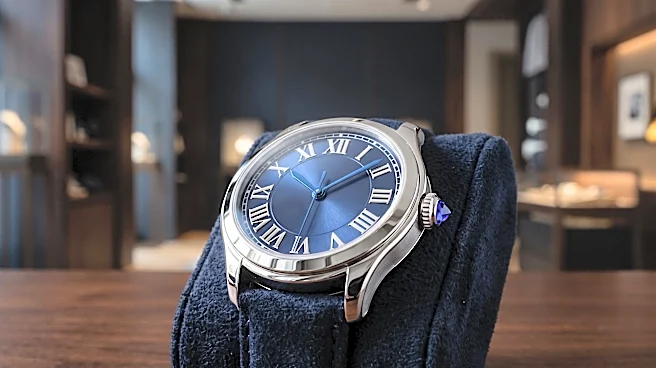
level, making it challenging for even experienced buyers to distinguish genuine articles from replicas. Counterfeiters often charge hundreds of dollars for watches that cost very little to produce, capitalizing on Cartier's cultural weight and global recognition. Authentic Cartier watches are characterized by exceptional material quality, precise finishing, and the use of solid metals, giving them a substantial weight. In contrast, fakes often use lighter alloys, resulting in a hollow or cheap feel. The dials of genuine Cartier watches feature precise Roman numerals, signature blue sword-shaped hands, and laser-engraved text with razor-sharp clarity, while counterfeits frequently exhibit uneven printing, inconsistent font weight, or smudged text. The blue spinel cabochon on the crown of most Cartier models is another key differentiator, often replaced by painted plastic in fakes.
Why It's Important?
The widespread counterfeiting of Cartier watches has significant implications for consumers and the luxury market. Buyers risk financial loss by purchasing inauthentic products that lack the craftsmanship, material quality, and investment value of genuine items. Beyond individual financial risks, the counterfeit watch market is often linked to broader criminal enterprises, meaning that purchasing fakes, even unknowingly, can inadvertently support these illicit networks. This undermines the integrity of the Cartier brand and harms legitimate craftspeople who dedicate themselves to producing high-quality luxury goods. For the U.S. market, the influx of counterfeit luxury items can erode consumer trust in high-end brands and create a challenging environment for authorized retailers and pre-owned luxury dealers who strive to offer authenticated products. The issue also highlights the need for increased vigilance and education among consumers to protect themselves from deceptive practices.
What's Next?
To combat the proliferation of fake Cartier watches, consumers are advised to purchase from authorized Cartier boutiques or reputable dealers specializing in authenticated luxury timepieces. For pre-owned or vintage pieces, working with specialists who have expertise in authenticating such items is crucial. Buyers should meticulously inspect key features such as the case, dial, movement, and serial numbers. Genuine Cartier watches have serial numbers engraved between the lugs, which should be crisp and consistent, unlike the poorly executed or pixelated serial numbers often found on fakes. Documentation, including original boxes, warranty cards, and service paperwork, also plays a vital role in authentication, though high-quality counterfeit operations can sometimes produce replica packaging. The ongoing challenge for Cartier and the luxury industry will be to continuously innovate authentication methods and educate consumers to stay ahead of increasingly sophisticated counterfeiters.
Beyond the Headlines
The issue of counterfeit luxury watches extends beyond mere product imitation; it touches upon deeper ethical, legal, and economic dimensions. The production and sale of fake goods contribute to a shadow economy that often operates outside legal and ethical frameworks, potentially funding other criminal activities. For consumers, the allure of a lower price for a luxury item can mask the hidden costs, including the lack of durability, poor quality, and zero resale value. Furthermore, the emotional and psychological impact of discovering a purchased item is fake can be significant, leading to feelings of deception and distrust. This situation underscores the broader societal challenge of intellectual property theft and the continuous battle between brand protection and illicit manufacturing. The long-term shift could involve greater integration of blockchain technology or other advanced authentication methods to provide immutable proof of origin and ownership for luxury goods, thereby safeguarding both consumers and brand integrity.