



What's Happening?
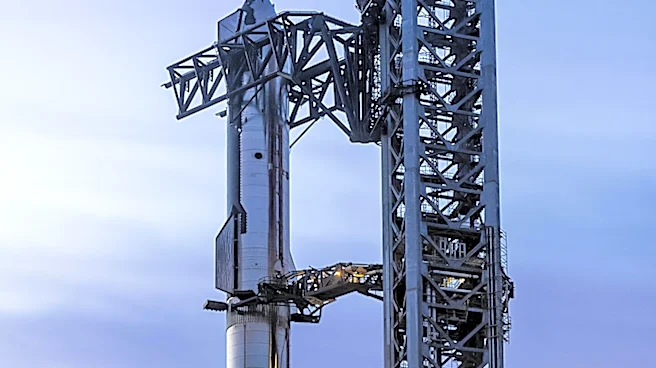
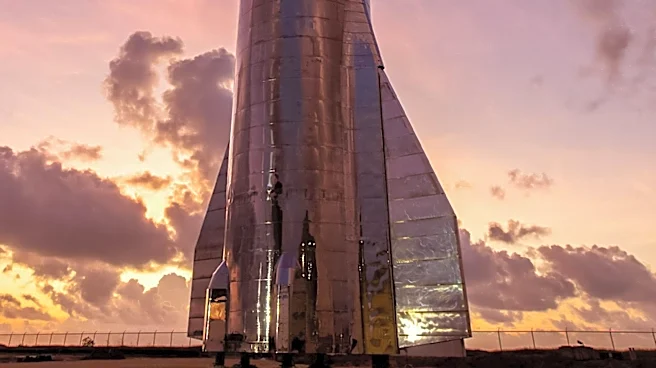
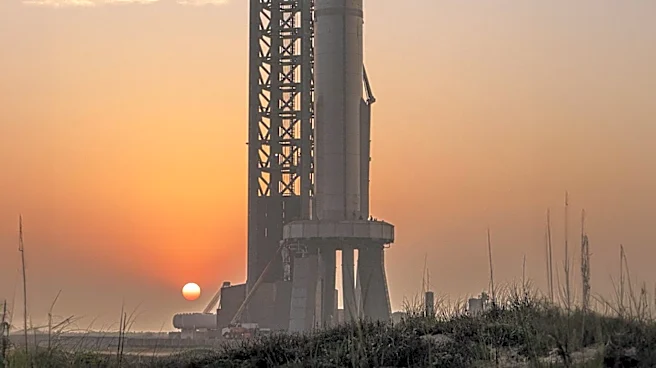
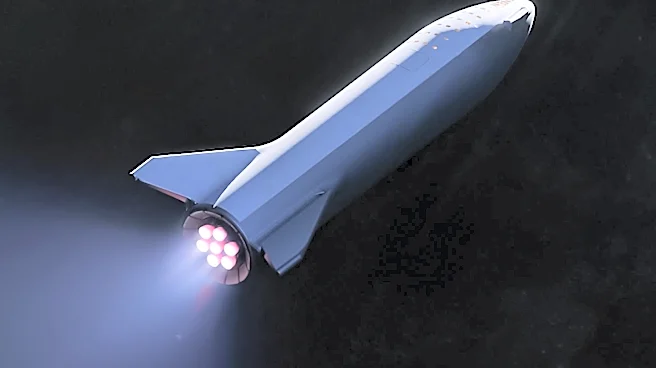
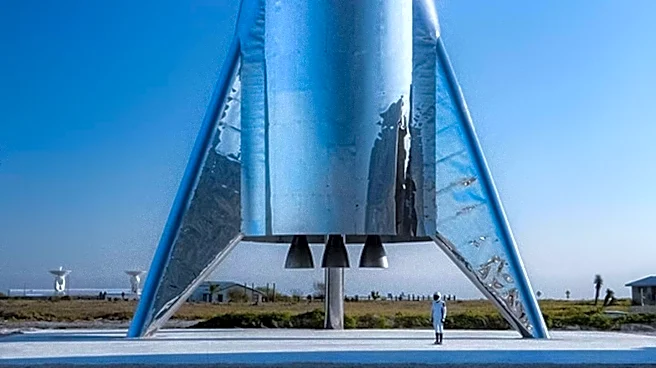
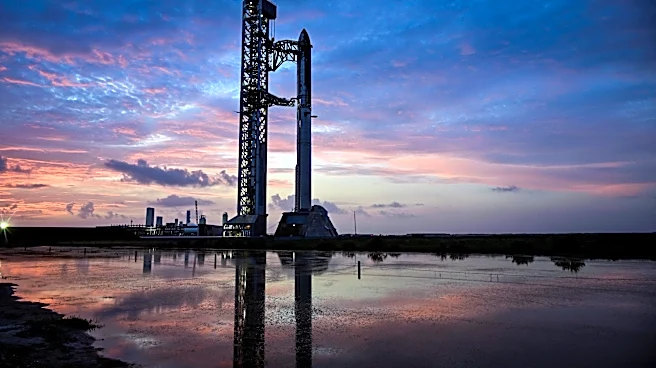
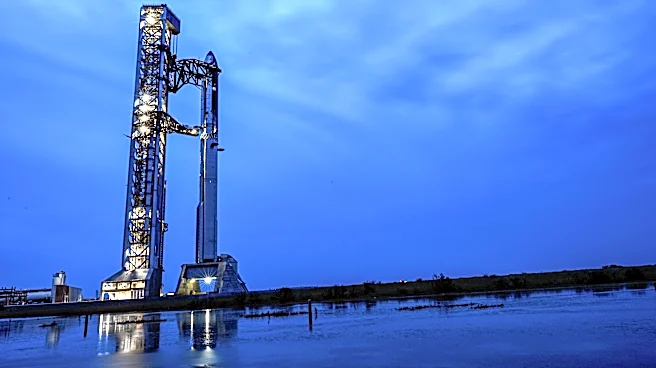
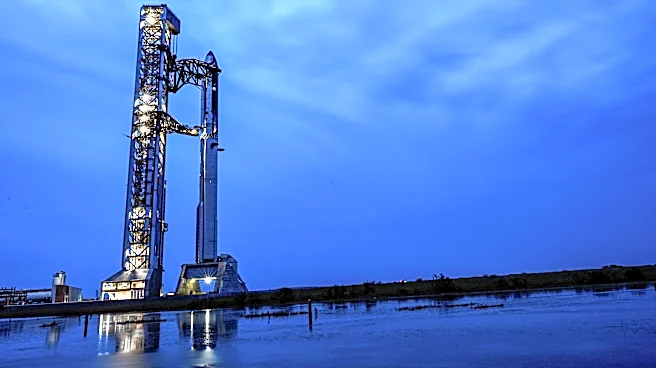
SpaceX successfully launched its 13th test flight of the Starship system, deploying 20 upgraded Starlink V3 satellites into suborbital space. The mission, which took off from SpaceX's Starbase facility in Texas, marked the first deployment of operational
V3 satellites designed to enhance bandwidth and internet speeds. Despite the successful deployment and controlled splashdown of the Starship upper stage in the Indian Ocean, the Super Heavy booster failed to relight enough engines for a controlled landing, crashing into the Gulf of Mexico. Concurrently, SpaceX faces legal challenges from environmental groups over a land swap deal with the U.S. Fish and Wildlife Service, which they argue harms local wildlife.
Why It's Important?
The successful test flight represents a significant step forward in SpaceX's efforts to develop a reusable spacecraft capable of supporting large-scale space operations. The deployment of next-generation Starlink satellites could expand internet connectivity, particularly in remote areas. However, the environmental challenges highlight ongoing tensions between technological advancement and ecological preservation. The legal battle over the land swap deal underscores the need for balancing industrial growth with environmental stewardship, a critical issue as space exploration activities increase.
What's Next?
SpaceX will likely continue refining its Starship system, focusing on improving the reliability of its booster landings. The outcome of the legal challenge regarding the land swap deal could set precedents for future industrial activities in environmentally sensitive areas. Stakeholders, including environmental groups and regulatory bodies, will be closely monitoring the situation, potentially influencing future policy decisions related to space exploration and environmental protection.