







What's Happening?
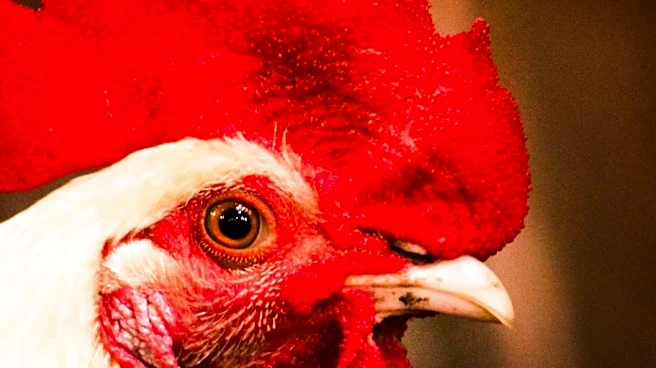
Tyson Foods has partnered with Signify Holding to develop and implement an advanced gradient lighting system for poultry barns. This system, known as Optient, allows chickens to choose between brighter and dimmer areas within their housing, catering to their natural
behavioral preferences. The technology utilizes LED-based illumination, which significantly improves energy efficiency, with Signify reporting potential energy savings of up to 70%. This collaboration highlights Tyson Foods' commitment to innovation and sustainability within its operations, specifically focusing on animal welfare and operational efficiency in poultry production. The initiative is part of a broader trend in the livestock grow lights market, which is seeing increased adoption of energy-efficient and species-specific lighting solutions to optimize animal production and reduce operational costs.
Why It's Important?
This collaboration between Tyson Foods and Signify is important for several reasons. Firstly, it underscores a growing emphasis on animal welfare within the U.S. food industry, as companies like Tyson Foods invest in technologies that allow for more natural animal behaviors. This can lead to improved animal health and potentially higher quality products, which are increasingly valued by consumers. Secondly, the significant energy savings achieved through LED lighting contribute to the sustainability goals of Tyson Foods and the broader agricultural sector. Reduced energy consumption lowers operational costs and decreases the environmental footprint of large-scale poultry farming. This move could set a precedent for other major food producers to adopt similar advanced lighting systems, driving innovation and sustainability across the industry. The focus on tailored lighting solutions also reflects a deeper understanding of animal physiology and behavior, moving beyond basic illumination to optimize environmental conditions for livestock.
What's Next?
The successful implementation of the Optient system by Tyson Foods and Signify is likely to encourage further adoption of advanced lighting technologies across the U.S. livestock industry. Other poultry producers and even different livestock sectors (swine, cattle) may explore similar partnerships to enhance animal welfare and achieve energy efficiencies. The livestock grow lights market is projected to grow significantly, with a CAGR of 6.45% between 2026 and 2035, indicating a strong market trend towards these solutions. Future developments may include more sophisticated programmable lighting systems, further optimization of light spectrums for specific animal needs, and increased integration of lighting controls with overall farm management systems. Government support, such as funding frameworks for specified LED lighting in livestock housing, could also accelerate the adoption of these technologies.
Beyond the Headlines
Beyond the immediate benefits of animal welfare and energy efficiency, this development points to a broader shift in agricultural practices towards precision farming and data-driven decision-making. The ability to tailor environmental conditions, such as lighting, to the specific needs and behaviors of animals represents a more sophisticated approach to livestock management. This could lead to ethical considerations regarding the extent to which technology can or should mimic natural environments, and the potential for such systems to become industry standards. Furthermore, the focus on sustainability and reduced energy consumption aligns with global efforts to combat climate change and reduce the environmental impact of food production. This initiative by Tyson Foods could influence consumer perceptions of large-scale farming, potentially improving trust and demand for products from companies that prioritize animal welfare and environmental stewardship.