






What's Happening?
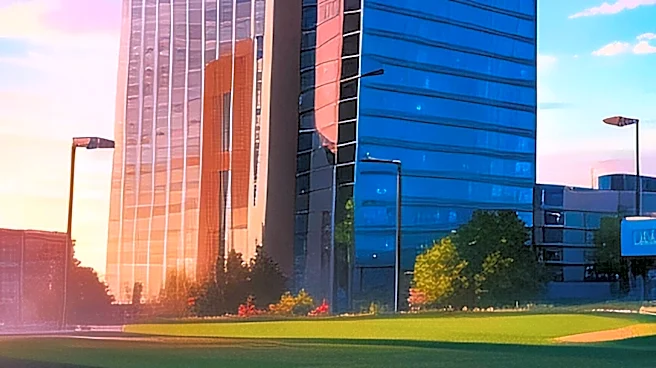
University Circle in Cleveland is experiencing a significant development boom, positioning it to surpass Downtown Cleveland as Ohio's largest employment hub. This growth is driven by substantial public and private investment, particularly in high-rise
residential and institutional expansions. Construction is underway for the 24-story East Stokes apartment tower, following the success of The Artisan, which leased out quickly despite high rents. Permits have also been requested for the $60 million Iris S. and Bert L. Wolstein Center at University Hospitals (UH) Cleveland Medical Center, and two large parking garages totaling $170 million. Cleveland Clinic is expanding its emergency department with a $230 million project and planning for new bed towers, requiring the relocation of its utility plant, police station, and Mellen Center. These developments are fueled by the growth of major employers like Cleveland Clinic, Ohio's largest employer, and University Hospitals, the eighth-largest. Additionally, Case Western Reserve University (CWRU) is the nation's fastest-growing research university within the Association of American Universities, with enrollment increasing significantly since 2000-01. New partnerships, such as Miami University's outpost for quantum-computing interns at Cleveland Clinic and Northeast Ohio Medical University's (NEOMED) Cleveland Health Innovation Center, further contribute to the area's economic vitality.
Why It's Important?
The transformation of University Circle into Ohio's largest employment hub signifies a major economic shift for Cleveland and the state. This growth is critical for the region's economy, creating jobs, attracting talent, and stimulating further investment. The concentration of world-class institutions like Cleveland Clinic, University Hospitals, and Case Western Reserve University fosters a robust ecosystem for healthcare, research, and education, making the area a magnet for innovation and specialized industries. The boom in high-rise residential development, such as the East Stokes tower, addresses the increasing demand for housing from the growing workforce, promoting a walkable, vibrant urban environment. This trend also indicates a broader demographic shift, with a rising number of childless households and families seeking specialized public schools in Cleveland, contributing to the city's revitalization. The emphasis on on-site workforces at these institutions, unlike the hybrid models prevalent in other downtowns, ensures a consistent daily presence, fostering a dynamic local economy and supporting retail growth. This development model could serve as a blueprint for other urban centers seeking to leverage institutional strengths for economic growth.
What's Next?
The current trajectory suggests continued expansion and development in University Circle. The completion of projects like the East Stokes tower, the Iris S. and Bert L. Wolstein Center, and the Cleveland Clinic's Neurological Building will further solidify the area's status as a major economic engine. Future plans include additional retail spaces, such as the proposed expansion of The Artisan retail space, and potentially a new hotel, indicating a growing demand for amenities to support the increasing population and workforce. The ongoing efforts by institutions like UH to expand, despite challenges like site plan approvals, suggest a sustained push for growth. The success of partnerships like the Ohio Institute for Quantum Computing and NEOMED's Cleveland Health Innovation Center will likely attract more academic and research collaborations, further enhancing the area's reputation as a hub for innovation. However, managing increased traffic congestion will be a critical challenge, though developments like Circle Square aim to mitigate this by promoting walkability and public transit use. The continued focus on private investment, alongside institutional growth, will be key to sustaining this momentum.
Beyond the Headlines
The rapid development in University Circle reflects a deeper trend of urban revitalization driven by anchor institutions. This phenomenon, often termed 'eds and meds' (education and medicine), highlights how universities and healthcare systems can become powerful engines for economic development, transforming neighborhoods and attracting diverse populations. The shift from underutilized land, once held by University Circle Inc. as a land bank, to high-density residential and commercial spaces, illustrates effective urban planning and strategic investment. The emphasis on creating a walkable, mixed-use environment caters to a younger, environmentally conscious demographic, signaling a broader cultural shift in urban living preferences. The growth also brings challenges, such as the potential for displacement or gentrification in surrounding neighborhoods, as seen with UH's expansion plans. The success of University Circle could inspire other cities to re-evaluate the economic potential of their institutional districts, fostering similar growth models. This transformation also underscores the evolving nature of urban centers, where traditional downtowns are being complemented or even surpassed by specialized hubs that offer a unique blend of employment, residential, and cultural opportunities.