








What's Happening?
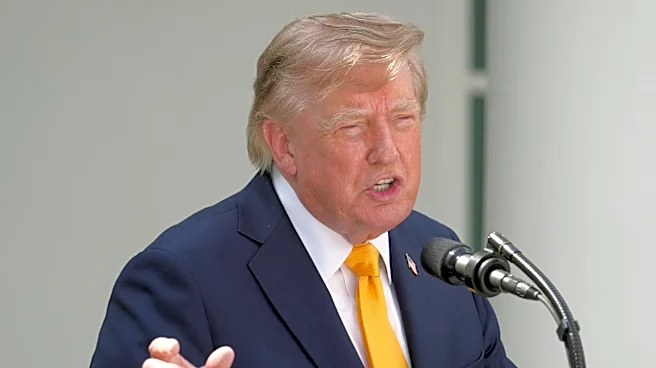
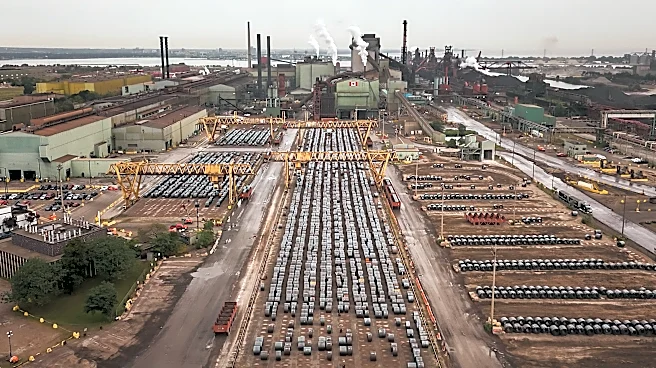
President Trump has threatened to impose a 50% tariff on Canadian automobiles, car parts, and steel, effective next year. This announcement follows the collapse of trade talks between the U.S. and Canada last week. The U.S. had already implemented tariffs
on various Canadian goods, prompting Canada to vow retaliation. President Trump stated on social media that Canada has been 'ripping off the United States of America for years' and criticized Canada's 'ridiculously high tariffs' on American farmers, asserting that such practices are 'not sustainable, and NOT ANYMORE!' This escalation deepens the trade rift between the two historically allied and reliable trading partners.
Why It's Important?
The imposition of 50% tariffs on Canadian automobiles, car parts, and steel would have significant repercussions for both the U.S. and Canadian economies. For the U.S., it could lead to increased costs for consumers and manufacturers who rely on Canadian imports, potentially disrupting supply chains and raising prices for vehicles and other goods. The automotive industry, in particular, is highly integrated across the U.S.-Canada border, and such tariffs could force companies to re-evaluate their production strategies, potentially leading to job losses or reduced competitiveness. For Canada, these tariffs would severely impact its key export sectors, potentially triggering a recession and further retaliatory measures. The broader implication is a continued strain on international trade relations, potentially undermining economic stability and fostering an environment of protectionism that could harm global economic growth.
What's Next?
Following President Trump's threat, Canada is expected to respond with further retaliatory tariffs on U.S. goods, intensifying the trade war. Businesses in both countries, particularly those in the automotive and steel sectors, will likely begin assessing the potential impact on their operations, supply chains, and pricing strategies. Consumers may face higher prices for goods affected by the tariffs. Diplomatic efforts to resolve the trade dispute are likely to continue, though the recent breakdown in talks suggests a challenging path forward. The situation could also influence upcoming political discussions and elections in both nations, as trade policy becomes a more prominent issue for voters and industries.
Beyond the Headlines
The escalating trade dispute between the U.S. and Canada highlights a broader shift in global trade dynamics, moving away from established multilateral agreements towards more bilateral and protectionist approaches. This could set a precedent for other countries to adopt similar measures, potentially fragmenting global trade and economic cooperation. The long-term implications include a re-evaluation of international alliances and trade partnerships, as countries prioritize national economic interests over traditional diplomatic ties. Furthermore, the dispute underscores the vulnerability of highly integrated industries, like the automotive sector, to political decisions, prompting companies to consider diversifying their supply chains and manufacturing bases to mitigate future risks.