




What's Happening?
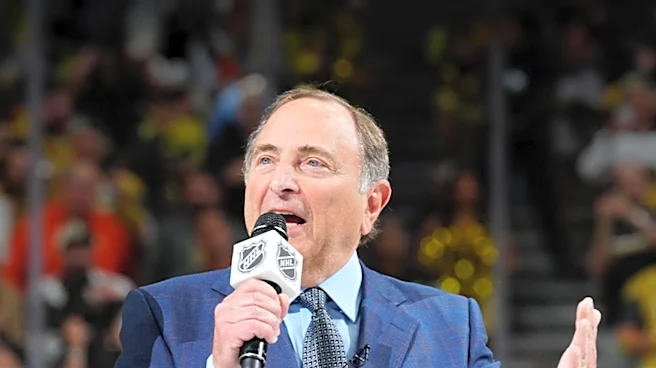
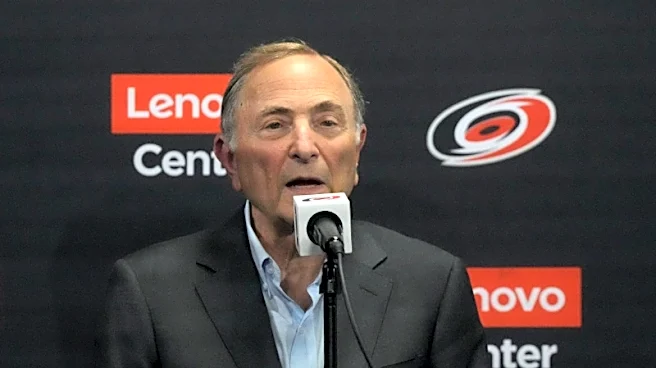
NHL Commissioner Gary Bettman has voiced concerns regarding the increasing number of no-trade clauses (NTCs) and no-move clauses (NMCs) in player contracts across the league. Bettman stated in an interview on Sportsnet's The FAN Hockey Show that he believes
this trend is not beneficial for players, clubs, or the fans' connection to the game. He indicated that the league will monitor the situation, suggesting that the current application of these clauses deviates from their original intent. According to PuckPedia.com, 279 NHL players currently possess some form of trade protection. The Toronto Maple Leafs, for instance, have 17 players with NTCs or NMCs, leaving only nine without such protection. Bettman's comments follow an offseason marked by multiple star players requesting trades and leveraging their trade clauses to influence their destinations.
Why It's Important?
The widespread use of NTCs and NMCs significantly impacts team management and roster flexibility within the NHL. These clauses restrict general managers' ability to trade players, potentially hindering efforts to improve teams, manage salary caps, or rebuild. The current situation, where even third and fourth-line players are receiving these protections, suggests a systemic issue that could lead to stagnation or imbalance within the league. While these clauses empower players by giving them more control over their careers and locations, they can also create challenges for teams trying to make strategic moves. The disparity between the NHL's 279 players with trade protection and the NBA's 11, the NFL's 8, and MLB's approximately 70, highlights a unique and potentially problematic trend in professional hockey. This imbalance could affect competitive parity and the overall dynamism of the league.
What's Next?
While Commissioner Bettman has expressed his concerns, the current collective bargaining agreement, which established the framework for NTCs and NMCs, is not up for renewal until 2030. This means that any significant league-wide changes to the prevalence or structure of these clauses are unlikely in the immediate future. The responsibility for managing these clauses currently rests with individual general managers, who have the power to decide whether to grant them during contract negotiations. Therefore, the immediate next steps will likely involve GMs exercising greater discipline and restraint in offering NTCs and NMCs. The league may continue to monitor the situation and gather data, potentially using it as leverage for discussions during the next round of collective bargaining. Player agents and the NHL Players Association will likely continue to advocate for player empowerment through such clauses.
Beyond the Headlines
The proliferation of no-trade clauses in the NHL reflects a broader shift in professional sports towards greater player empowerment. While initially intended to protect veteran players or those with long tenures, their widespread application to a larger segment of the player base raises questions about the balance of power between players and management. This trend could lead to a re-evaluation of contract structures and negotiation strategies across the league. Ethically, it highlights the tension between individual player rights and the collective health and competitiveness of the league. The long-term implications could include a more static player market, reduced trade activity, and potentially a greater reliance on free agency for roster changes. This situation also underscores the importance of collective bargaining agreements in shaping the operational landscape of professional sports leagues.