






What's Happening?
David Friedberg, an entrepreneur and investor, has publicly dismissed fears of an AI-driven job apocalypse, asserting that such concerns are a 'Luddite idea.' According to a blog post, Friedberg believes that historical patterns show humanity consistently
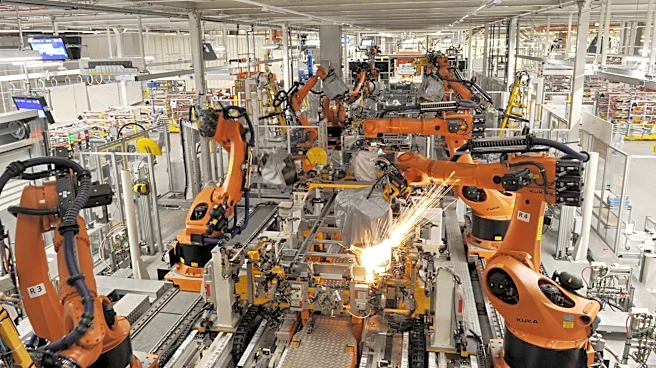
adapting to technological advancements by finding new roles. He suggests that rather than causing widespread unemployment, artificial intelligence and robotics will address an emerging demographic crisis characterized by low birth rates, high retirement rates among baby boomers, and a growing shortage of workers for national and international job vacancies. This perspective aligns with statements from other experts, including Sven Smit and Anu Madgavkar of McKinsey Global Institute, and Yusuke Aoki, Senior Economist at Indeed Hiring Lab Japan, who emphasize demographics as the primary driver of employment changes.
Why It's Important?
Friedberg's viewpoint is significant for the U.S. labor market and economic policy discussions. If his assessment holds true, the narrative around AI's impact on employment shifts from job displacement to job augmentation and demographic gap-filling. This could influence investment in AI technologies, workforce training programs, and immigration policies. Businesses might increasingly adopt AI not just for efficiency but as a solution to labor shortages, particularly in sectors facing an aging workforce. For policymakers, it suggests a need to focus on preparing the workforce for collaboration with AI rather than solely on mitigating job losses. The potential for AI to alleviate demographic pressures could also impact long-term economic growth projections and social welfare systems, as a shrinking workforce typically strains these areas.
What's Next?
The ongoing debate about AI's impact on jobs will likely continue to shape public discourse and policy decisions. Businesses are expected to further integrate AI into their operations, potentially accelerating the demand for new skills and roles that complement AI capabilities. Educational institutions may need to adapt curricula to prepare students for an AI-integrated workforce, emphasizing critical thinking, creativity, and problem-solving skills that are less susceptible to automation. Government agencies might explore incentives for AI adoption in industries facing labor shortages and invest in retraining programs for workers whose tasks are most likely to be automated. The Bureau of Labor Statistics will continue to monitor employment trends, providing crucial data to inform these discussions and policy adjustments.
Beyond the Headlines
Beyond the immediate economic implications, Friedberg's perspective touches on a deeper philosophical question about human adaptability and the nature of work. The 'Luddite idea' he references highlights a recurring pattern throughout history where technological advancements initially provoke fear of job loss, only to eventually lead to new forms of employment and economic structures. This suggests that the challenge may not be a lack of jobs, but rather the need for continuous learning and societal adjustment to evolving technological landscapes. The ethical considerations around AI's role in society, including equitable access to new opportunities and the potential for widening skill gaps, will remain critical as AI integration progresses.