








What's Happening?
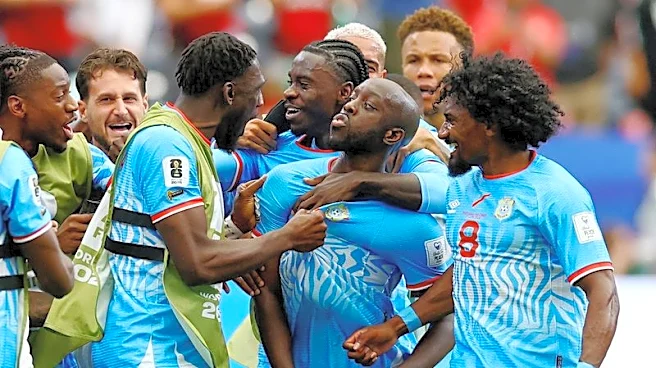
Yoane Wissa, a forward for Newcastle United, made history by scoring the Democratic Republic of the Congo's (DR Congo) first-ever goal at a World Cup. The goal came during a group stage match against Portugal in Houston, marking DR Congo's return to the World Cup after
52 years. Wissa's header equalized the match, which ended in a 1-1 draw. This achievement is particularly significant for Wissa, who overcame a traumatic acid attack in 2021 that nearly cost him his sight. His resilience and determination have been widely praised.
Why It's Important?
Wissa's historic goal is a significant milestone for DR Congo, highlighting the country's progress in international football. For the U.S., hosting such a momentous event underscores its role as a key player in global sports. The match also brings attention to the personal story of Wissa, whose recovery from a life-threatening attack serves as an inspiring narrative of resilience. This event may boost interest in soccer within the U.S., contributing to the sport's growing popularity and potentially influencing future investments in soccer infrastructure and youth programs.
What's Next?
Following this historic achievement, DR Congo will continue its World Cup campaign, with Wissa likely playing a crucial role in their upcoming matches. The team's performance could inspire further development of soccer in DR Congo and increase its visibility on the international stage. For Wissa, this moment may open up new opportunities in his career, both on and off the field. The U.S. may also see increased engagement from fans and media, further solidifying its position as a host for major international sporting events.
Beyond the Headlines
Wissa's story highlights broader issues of personal safety and resilience in sports. His recovery from the acid attack and subsequent success on the field underscore the importance of mental health support and security for athletes. This incident also raises awareness about the prevalence of violence against public figures and the need for protective measures. Wissa's journey may inspire discussions on athlete welfare and the role of sports in overcoming adversity.