






What's Happening?
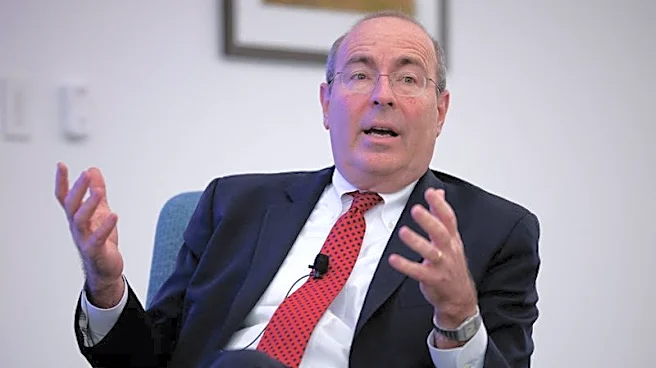
David Kelly, Chief Global Strategist at J.P. Morgan Asset Management, suggests that the U.S. housing market's primary issue may be a shortage of people rather than homes. In his October 26 research note, Kelly highlights several factors contributing to the current
state, including a decade of easy money, tariffs, and immigration policies that simultaneously increase construction costs and limit the population needing housing. He also points to the Federal Reserve's interest rate fluctuations as a significant impact on the housing sector. Kelly projects U.S. population growth of only 800,000 annually over the next few years, implying a demographic need for just 320,000 new housing units per year, a stark contrast to the approximately 1 million per year seen in the early 2000s. This perspective challenges the common narrative that the country faces a severe housing shortage, with Kelly arguing for a situation of 'net excess supply.' He notes that rental vacancy rates have risen from 5.6% to 7.3% over the past four years, and homeowner vacancy rates from 0.8% to 1.2%.
Why It's Important?
This analysis from J.P. Morgan Asset Management carries significant implications for the U.S. housing market, economic policy, and related industries. If the core problem is indeed demographic rather than a pure supply deficit, it could lead to a re-evaluation of housing development strategies and urban planning. Builders and real estate investors might need to adjust their long-term projections, potentially shifting focus from aggressive new construction to managing existing inventory or targeting specific demographic niches. The report also highlights the impact of immigration policies on housing demand and labor availability, suggesting that changes in these areas could further influence market dynamics. Furthermore, the competition for labor and resources from the booming AI-related construction sector, particularly data centers, is driving up costs for homebuilders, affecting affordability and the pace of residential development. This confluence of factors suggests a complex environment where traditional solutions to housing affordability may not be sufficient.
What's Next?
Kelly anticipates that the Federal Reserve will raise rates in December, potentially marking the last hike of the current cycle due to weak housing conditions. He believes mortgage rates are unlikely to fall significantly below 7.0% without a recession, indicating a continued challenging environment for homebuyers. Housing starts are expected to remain low, with projections of 1.32 million this year and 1.24 million in 2027, the weakest figures since 2019. The ongoing competition for construction workers and materials from the rapidly expanding AI infrastructure sector is likely to intensify, further pressuring homebuilding costs. This situation suggests that young people, in particular, will continue to face difficulties in achieving homeownership, a trend Kelly attributes to tougher lending standards and the advantage older households have in accumulating larger down payments. The market will be closely watching for any shifts in population growth, immigration policies, and the Federal Reserve's monetary policy decisions, as these will be critical in shaping the future trajectory of the U.S. housing market.
Beyond the Headlines
The deeper implications of J.P. Morgan's analysis extend to societal structures and long-term economic trends. The idea that the U.S. might have a 'net excess supply' of housing due to demographic shifts challenges the widely accepted narrative of a severe housing shortage. This could lead to a re-evaluation of urban development policies, potentially shifting focus from simply building more homes to addressing issues of affordability, distribution, and the changing needs of a slower-growing, aging population. The report also subtly touches upon the ethical dimension of housing accessibility, particularly for younger generations, whose aspirations for homeownership are being postponed. The competition for resources between residential construction and the AI boom highlights a broader economic tension: how to balance technological advancement and infrastructure development with fundamental societal needs like affordable housing. This dynamic could lead to policy debates on resource allocation, labor market interventions, and the long-term sustainability of current growth models.