


What's Happening?
Former NBA player Enes Kanter Freedom has filed a federal lawsuit against the Chicago Sky, the Metropolitan Pier and Exposition Authority (MPEA), and the City of Chicago. This legal action follows his ejection and subsequent ban from Wintrust Arena during
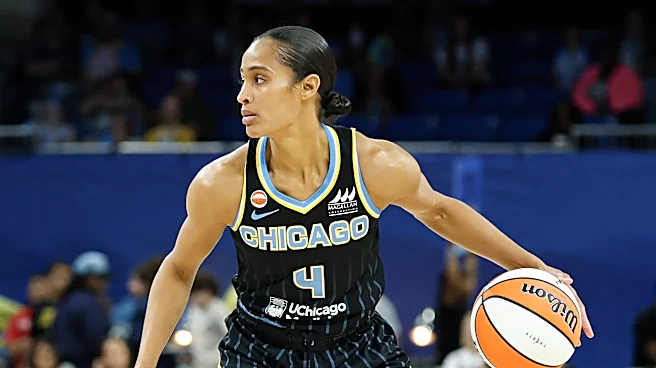
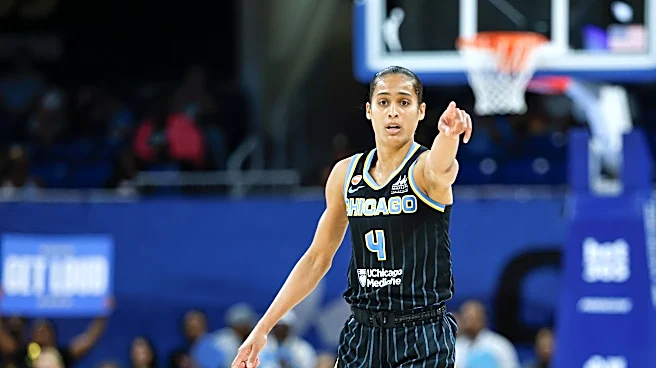
a Chicago Sky game last month. Freedom was removed from the arena after a verbal altercation with Sky point guard Natasha Cloud, while wearing a T-shirt that read: 'WOMAN noun. adult human female.' The lawsuit claims that his First Amendment rights were violated. According to Sky owner Michael Alter, Freedom began to 'chirp' and 'engage' Cloud in an attempt to provoke her. Alter stated that Freedom's actions, specifically stepping towards the court, transformed him from a fan into a 'potential threat,' leading to his removal and ban. The WNBA's 2026 Collective Bargaining Agreement states that 'only players who are women are eligible to play in the WNBA,' but it does not provide a further definition of 'woman' or a publicly available policy on transgender or intersex athlete eligibility. Freedom had previously declared himself eligible for the WNBA draft to highlight these policy ambiguities, though the WNBA confirmed he is not eligible to play.
Why It's Important?
This lawsuit is important as it directly challenges the boundaries of free speech within private sports venues and raises questions about the WNBA's policies regarding gender eligibility. The case could set a precedent for how sports organizations manage fan conduct, especially when it intersects with politically charged social issues. For the WNBA, the legal challenge highlights a lack of clear guidelines on transgender athlete participation, a topic that has generated significant national debate. The outcome could force the league to formalize its definitions and policies, impacting future eligibility rules and potentially influencing other sports leagues. Furthermore, it underscores the tension between individual expression and the need for a safe and controlled environment at sporting events, affecting both athletes and spectators. The involvement of a former NBA player also amplifies the visibility of this debate, drawing broader public attention to gender identity in sports.
What's Next?
The federal lawsuit will proceed in the U.S. District Court for the Northern District of Illinois. Freedom is seeking a declaration that his First Amendment rights were violated, the lifting of his indefinite ban from Wintrust Arena, coverage of his legal fees, and an award of nominal and compensatory damages. The Chicago Sky and the other defendants will likely respond to the allegations, and the case may involve discovery and potentially a jury trial as requested by Freedom. The WNBA may face increased pressure to clarify its eligibility policies for transgender athletes, especially given the ongoing public discourse and the legal challenge. The outcome of this lawsuit could influence how sports organizations balance free speech rights with maintaining order and ensuring the safety of participants and attendees. It remains to be seen if the WNBA will issue further guidance or alter its collective bargaining agreement in response to these events.
Beyond the Headlines
This incident and subsequent lawsuit delve into deeper societal discussions surrounding gender identity, free speech, and the role of sports as a platform for social commentary. The ambiguity in the WNBA's collective bargaining agreement regarding the definition of 'woman' reflects a broader challenge in society to reconcile traditional biological definitions with evolving understandings of gender identity. The case also highlights the increasing politicization of sports, where athletes and public figures use events to express strong opinions on controversial topics. This can lead to clashes between different viewpoints, as seen in the verbal altercation between Freedom and Natasha Cloud. The legal battle could force a more explicit articulation of values and rules within professional sports, potentially impacting fan engagement, athlete endorsements, and the overall public image of leagues. It also raises questions about the responsibilities of venue owners and event organizers in managing potentially provocative expressions by attendees.