


What's Happening?
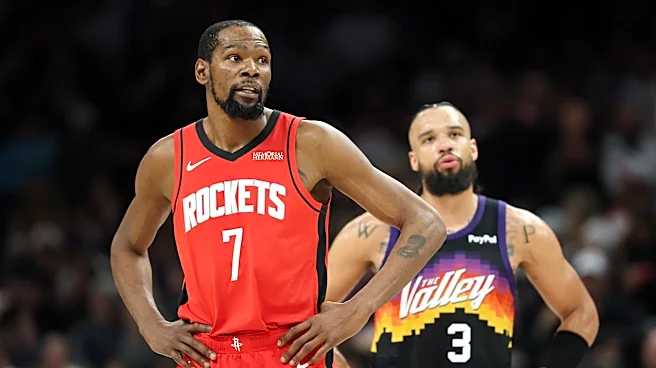
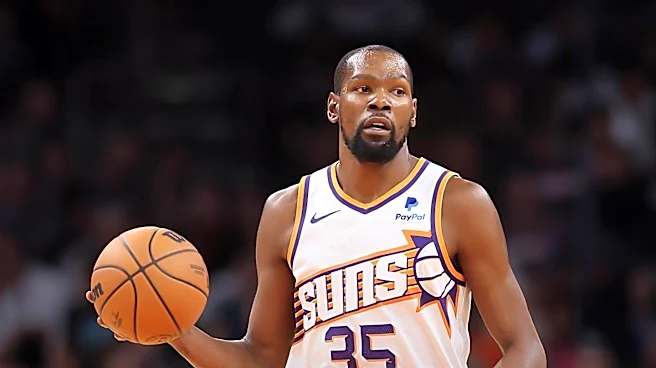
Houston Rockets forward Kevin Durant's history with social media 'burner' accounts has resurfaced after a London fan was mistakenly identified as one of his anonymous online personas. On November 5, X user Drew, posting as @ThunderHusky17, quote-tweeted
a reply from another user, @Kfo1234567 (UKD), and jokingly declared, 'Found Kevin's new burner.' The post quickly went viral, garnering over 412,000 views. The user UKD had been defending Durant against critics, particularly regarding past decisions by the Oklahoma City Thunder's front office and former coach Billy Donovan. UKD later clarified that he is simply a fan from London who admires Durant. This incident brought back memories of Durant's 2017 social media slip-up, where he accidentally posted criticism of the Thunder and Donovan from his main account while referring to himself in the third person, an event he later acknowledged and apologized for.
Why It's Important?
This incident highlights the enduring impact of past social media controversies on public perception, particularly for high-profile athletes like Kevin Durant. Even years after his initial 'burner' account incident, any passionate defense of him online can trigger widespread speculation and viral moments. For athletes, this underscores the constant scrutiny they face in the digital age and how their online interactions can be misinterpreted or amplified. For the NBA, such events contribute to the ongoing narrative around player-fan engagement and the challenges of maintaining privacy in a hyper-connected world. The recurring nature of these 'burner' jokes also reflects a persistent fan interest in the behind-the-scenes dynamics of player relationships with former teams and coaches, such as the long-standing debate among Thunder fans about the trade of James Harden.
What's Next?
While this particular incident was a misunderstanding, the 'burner' account narrative is likely to continue to follow Kevin Durant, with fans and media quick to identify any passionate online defense as potentially linked to him. Durant has previously dismissed such questions, stating he would not 'get into Twitter nonsense.' The broader implication is that public figures must navigate an environment where their past online actions can be easily recalled and recontextualized, regardless of their current intent. For social media platforms, these viral moments demonstrate the power of user-generated content and the rapid spread of information, even when based on speculation or humor. The ongoing debate among basketball fans about historical team decisions, like the James Harden trade, will also continue to fuel online discussions.
Beyond the Headlines
The 'burner' account phenomenon, as exemplified by Kevin Durant's past, delves into deeper psychological and ethical considerations regarding identity, authenticity, and public persona in the digital realm. It raises questions about the pressure public figures face to maintain a curated image and the temptation to express unfiltered opinions anonymously. The ease with which a fan's passionate defense can be mistaken for a celebrity's secret account speaks to a collective skepticism and a desire to uncover 'hidden truths' in the age of social media. This incident also subtly touches upon the nature of fandom itself—how fans internalize team narratives, player loyalties, and historical events, leading to persistent debates that can span years and even decades, shaping the collective memory of a sport.