








What's Happening?
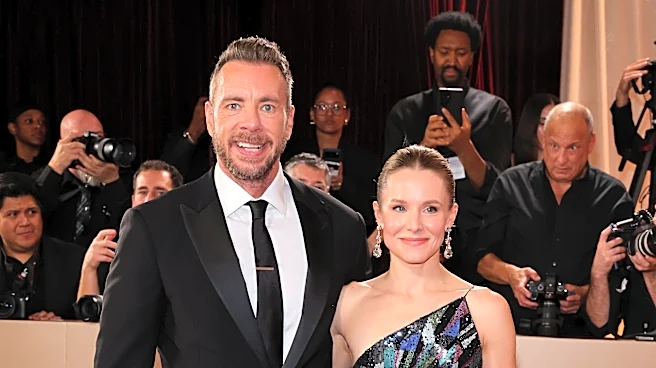
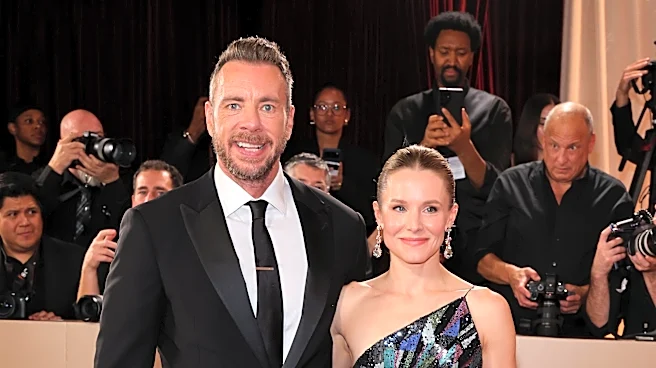
Dax Shepard, on his 'Armchair Expert' podcast, responded to public interpretations of his marriage with Kristen Bell, specifically addressing comments made by Bell on Instagram and during a previous podcast appearance. Last October, Bell posted about
their 12th anniversary, quoting Shepard saying, 'I would never kill you. A lot of men have killed their wives at a certain point. Even though I’m heavily incentivized to kill you, I never would.' Shepard clarified this statement, explaining it was a joke made while watching 'Dateline,' intended as a compliment to Bell's financial success. He also addressed recent discourse about him flirting with other women in front of Bell, stating that the narrative was misinterpreted as Bell being in a controlling relationship. Shepard and Bell have historically maintained a reputation for radical honesty about their relationship, aiming to show both the positive and negative aspects of their partnership.
Why It's Important?
This event highlights the complexities and potential pitfalls of celebrity couples sharing intimate details of their relationships publicly, especially in the age of social media and podcasting. While Dax Shepard and Kristen Bell have cultivated an image of transparency, their recent experiences demonstrate how easily comments can be taken out of context or misinterpreted by the public, leading to unintended scrutiny and negative narratives. For public figures, the line between authenticity and oversharing becomes increasingly blurred, impacting their personal brands and public perception. The incident also underscores the rapid spread of information and opinion online, where initial reactions can quickly solidify into widespread narratives, regardless of the original intent or full context.
Beyond the Headlines
The ongoing public discussion surrounding Dax Shepard and Kristen Bell's marriage touches upon broader societal expectations and judgments placed on celebrity relationships. Their commitment to 'radical honesty' challenges traditional celebrity narratives that often present a curated, perfect image. However, this approach also exposes them to intense public scrutiny and the risk of their words being dissected and reinterpreted. This situation raises questions about the nature of public discourse, the responsibility of celebrities in managing their narratives, and the audience's role in consuming and interpreting such content. It also subtly reflects on how humor and sarcasm can be lost in translation when shared across different platforms and audiences, leading to unintended consequences for those in the public eye.