







What's Happening?
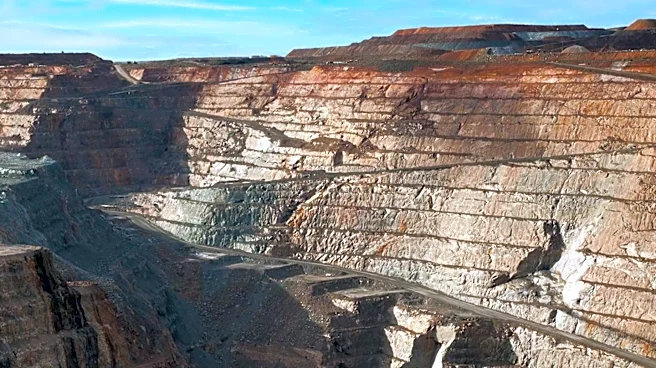
Zambia is contemplating a reduction in its 16% Value Added Tax (VAT) on gold to encourage formal trading and address a significant discrepancy in international trade records. The United Arab Emirates reported nearly $1.8 billion in gold imports from Zambia in 2023,
while Zambia recorded only a fraction of that amount as direct exports to the Gulf state. This gap suggests a substantial informal gold market, leading to an estimated loss of $80 million to $240 million in mineral royalties for Zambia. Hapenga Kabeta, Permanent Secretary in Zambia’s Ministry of Mines and Minerals Development, indicated that the government is considering reducing VAT to facilitate formal trade for artisanal and small-scale miners. This move aims to transform gold into a more transparent and significant source of mining revenue, alongside copper, which has historically dominated the country's mining industry.
Why It's Important?
The proposed tax cut is a critical step for Zambia to formalize its gold sector, which is currently characterized by a large informal market and significant revenue leakage. By reducing VAT, the government hopes to incentivize miners and traders to operate within official channels, thereby increasing tax collection and providing a clearer picture of the industry's true scale. This initiative is particularly important given Zambia's proximity to the Democratic Republic of Congo, another major mineral producer grappling with informal gold trading. Formalizing the gold market could boost Zambia's economy by expanding its tax base and attracting more legitimate investment. It also aligns with Zambia's broader ambition to diversify its mining revenue beyond copper and enhance transparency in its mineral exports, which is crucial for economic stability and international credibility.
What's Next?
The Zambian government will likely continue discussions and consultations with stakeholders, including the World Gold Council, regarding the proposed VAT reduction. If approved, the tax cut would aim to integrate artisanal and small-scale miners into the formal economy, potentially leading to increased official gold exports and higher mineral royalty collections. The success of this measure could influence future tax policies in Zambia's mining sector and potentially serve as a model for other African nations facing similar challenges with informal mineral markets. Additionally, the Lusaka Securities Exchange is preparing to launch the country’s first gold exchange-traded fund, which, combined with formalization efforts, could further enhance investor exposure to Zambia's gold market.
Beyond the Headlines
The discrepancy in trade data highlights a pervasive issue in resource-rich developing nations: the challenge of controlling and taxing informal mineral trade. This 'mirror-trade' gap not only results in significant revenue losses for governments but also raises concerns about illicit financial flows, money laundering, and potential exploitation of artisanal miners. By formalizing the gold sector, Zambia aims to improve governance, ensure fair labor practices, and enhance environmental compliance within the industry. This move could also have broader implications for regional stability, as informal mining often fuels conflicts and illicit networks. The ethical dimension of ensuring that the wealth generated from natural resources benefits the nation and its citizens, rather than being siphoned off through informal channels, is a central theme in this policy consideration.