
What's Happening?
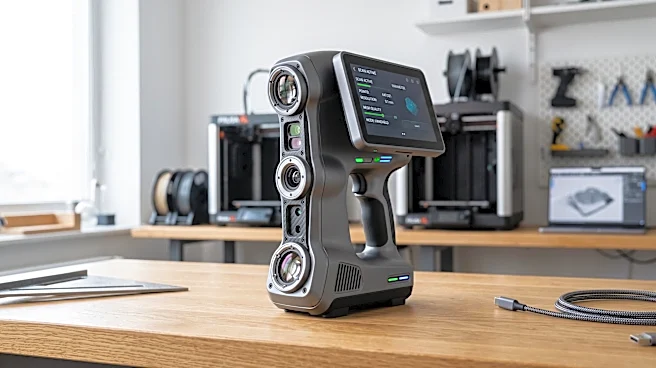
Bambu Lab, a company specializing in desktop 3D printers, has launched its first 3D scanner, the S1. This new device aims to simplify the 3D scanning process by integrating advanced features and user-friendly
software. The S1 boasts a built-in 3.5-inch HD touchscreen for on-device mode and parameter changes, and a 2x4800 mAh battery providing up to 3.5 hours of scanning. It supports fully wireless operation via Wi-Fi 6, with all necessary hardware built into its ergonomic 710g body. The accompanying free software, Bambu Scan, offers 14 scene presets for various object types, automatically configuring scanning modes and parameters. It also includes 8 advanced editing tools for tasks like sculpting, quick measurement, and dimensional analysis, all within the same application. The S1 features multiple scanning modes, including blue laser and infrared structured light, offering high accuracy and scan rates. The device is designed to seamlessly connect with the Bambu Lab ecosystem, allowing models to be transferred directly to Bambu Studio for 3D printing with a single click.
Why It's Important?
The introduction of the Bambu Lab S1 3D scanner is significant for the U.S. 3D printing and manufacturing sectors. By lowering the barriers to entry for 3D scanning, particularly through simplified operation and integrated software, Bambu Lab could expand the adoption of 3D scanning technology among hobbyists, small businesses, and educational institutions. The S1's ability to streamline the workflow from physical object to 3D print, combined with its advanced editing tools, could enhance product development cycles and prototyping capabilities for U.S. companies. The integrated ecosystem approach, where scanning and printing are seamlessly linked, could foster greater efficiency and innovation in design and manufacturing. This development could also intensify competition in the U.S. 3D scanner market, potentially leading to more affordable and accessible solutions for consumers and businesses. The focus on user-friendliness and comprehensive features without additional software costs could empower a broader range of users to leverage 3D scanning for various applications, from artistic creation to engineering analysis.
What's Next?
Bambu Lab plans to release macOS support for its Bambu Scan software in the near future, further expanding its user base. Additionally, the company will offer an electric turntable and a Wi-Fi adapter as separate accessories to enhance the S1's capabilities. The S1 3D scanner is priced at $1699 USD. The integration of the S1 into the existing Bambu Lab ecosystem suggests a continued focus on providing a comprehensive and user-friendly experience for 3D printing and related technologies. This move could prompt other 3D printer manufacturers to develop similar integrated solutions, potentially leading to a more competitive and innovative market for 3D scanning and printing technologies in the U.S. The availability of advanced editing tools within the free software could also set a new standard for bundled software in the industry.
Beyond the Headlines
The launch of the Bambu Lab S1 highlights a broader trend towards democratizing advanced manufacturing technologies. By making 3D scanning more accessible and less complex, Bambu Lab is not just selling a product but also fostering a more inclusive environment for innovation. This could have long-term implications for education, enabling students and educators to engage with advanced design and engineering concepts more readily. Ethically, the ease of replicating physical objects raises questions about intellectual property and copyright, as individuals can more easily scan and reproduce designs. Culturally, this accessibility could fuel a new wave of creativity and customization, allowing individuals to personalize and create objects with unprecedented ease. The seamless integration of hardware and software also points to a future where complex technological processes are increasingly managed through intuitive, interconnected ecosystems, reducing the technical expertise required for advanced tasks.