




What's Happening?
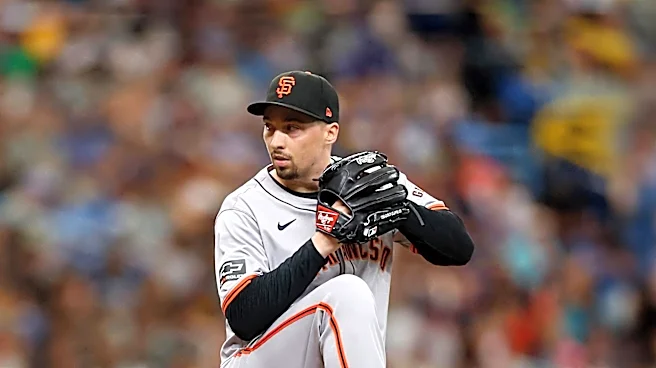
Buster Posey, President of Baseball Operations for the San Francisco Giants, has outlined a new strategy for the team's pitching staff, emphasizing pushing pitchers to their physical limits in training, even if it increases the risk of injury. This approach
comes after the Giants experienced a significant number of elbow injuries among their young pitchers in 2026, with four undergoing surgery. Posey's perspective suggests that in modern baseball, the fear of elbow injuries, such as those requiring Tommy John surgery, is less of a deterrent than it once was, and such setbacks are now considered an expected part of a pitcher's career. He believes that maximizing the potential and 'raw stuff' of pitchers is crucial for the team's competitiveness, drawing parallels to the high-velocity pitching seen in current MLB playoffs. The team has made minor adjustments to its coaching staff, but the core focus is on aggressive development.
Why It's Important?
This shift in philosophy by the San Francisco Giants could have significant implications for player development and team management across Major League Baseball. By openly acknowledging and accepting a higher risk of injury in pursuit of peak performance, the Giants are challenging traditional approaches to pitcher health and longevity. This strategy could lead to a new standard in how teams balance player welfare with competitive advantage. If successful, other organizations might adopt similar aggressive development models, potentially increasing the intensity of training regimens throughout the league. Conversely, if the strategy results in a continued high rate of injuries without a corresponding increase in on-field success, it could draw criticism and raise questions about player safety and long-term career prospects. The emphasis on 'milking every drop of potential' also highlights the increasing premium placed on raw talent and velocity in contemporary baseball.
What's Next?
The San Francisco Giants are expected to continue implementing this aggressive pitching development strategy in the upcoming seasons. This will involve pushing their current roster of pitchers to their physical limits and potentially seeking out new talent, both through free agency and trades, that aligns with this high-risk, high-reward philosophy. The team's performance in the coming years, particularly regarding the health and effectiveness of its pitching staff, will be a critical indicator of the strategy's success. Other MLB teams will likely monitor the Giants' outcomes closely, observing whether this approach yields competitive advantages or leads to an unsustainable rate of player injuries. The ongoing debate about player safety versus performance maximization in professional sports will undoubtedly be influenced by the results of this new direction.
Beyond the Headlines
The Giants' new approach to pitching development raises profound ethical and long-term questions about the balance between athletic performance and player well-being. By viewing injuries like Tommy John surgery as an 'expected' part of a pitcher's career, the organization is implicitly accepting a certain level of physical toll on its athletes. This perspective could normalize more aggressive training methods across the sport, potentially leading to a generation of pitchers with shorter, more intense careers but also higher rates of significant injuries. It also highlights the evolving nature of professional sports, where the pursuit of marginal gains in performance often comes with increased physical demands. The long-term health implications for players, and the potential for increased medical costs and rehabilitation challenges for teams, are significant considerations that extend beyond immediate on-field results. This strategy could also influence how young athletes are trained at lower levels, as they might be pushed harder earlier in their careers to meet the demands of professional baseball.