





What's Happening?
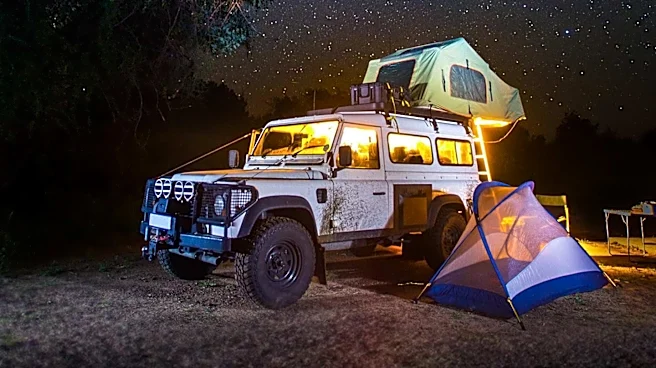
Lance Gillies, CIO & Founder of EarthCruiser Overland Vehicles, has provided insights into the evolving overland market, emphasizing the importance of understanding customer needs beyond basic product features. Gillies notes that the term 'overlander'
has expanded significantly from its original meaning, now encompassing a wide range of products and experiences. He highlights that while large manufacturers are entering the market with capabilities for scale production and extensive marketing, the core challenge remains proving a product's utility and the company's reliability to potential customers. Gillies stresses that customers are not merely looking for flashy features but rather for a vehicle that genuinely works for them and a company that consistently delivers on its promises. He recalls that early EarthCruiser customers in Australia and the U.S. sought vehicles that allowed them to comfortably explore off-road environments with their companions, prioritizing functionality over luxury. The article also mentions the role of events like Overland Expo in providing managed off-road experiences for potential buyers.
Why It's Important?
This discussion is important for the U.S. business landscape, particularly within the automotive and recreational vehicle (RV) industries, as it sheds light on a rapidly growing niche market. The 'overlanding' trend represents a significant shift in consumer preferences towards adventure travel and self-sufficient exploration, moving beyond traditional RVing. For manufacturers, understanding this evolving customer base is crucial for product development, marketing strategies, and long-term success. Gillies's emphasis on 'proving' the product and the company's integrity, rather than just 'selling,' underscores a demand for authenticity and reliability in a market where consumers are investing heavily in specialized equipment. This insight can guide businesses in tailoring their offerings and communication to resonate with a demographic that values practical utility and robust performance over superficial appeal. The growth of this market also presents opportunities for ancillary businesses, such as gear manufacturers, tour operators, and service providers, to cater to the specific needs of overlanding enthusiasts.
What's Next?
The overlanding market is expected to continue its growth trajectory, attracting more attention from both established and new manufacturers. Companies will likely invest further in research and development to create vehicles and accessories that meet the specific demands of this segment, focusing on durability, self-sufficiency, and off-road capability. Marketing efforts will need to evolve, moving beyond traditional advertising to emphasize experiential demonstrations and community engagement, as suggested by Gillies's focus on 'showing' rather than 'telling.' The role of events like Overland Expo will become even more critical as platforms for manufacturers to connect directly with potential customers and demonstrate their products in real-world scenarios. As the market matures, there may also be increased competition, leading to innovations in design, technology, and customer service. Businesses that prioritize genuine customer understanding and build trust through reliable products and consistent performance are likely to thrive in this expanding sector.
Beyond the Headlines
Beyond the commercial aspects, the rise of the overlanding market reflects broader cultural shifts in how Americans perceive leisure, travel, and connection with nature. It signifies a growing desire for experiential travel, self-reliance, and a departure from conventional tourism. This trend can have implications for environmental conservation, as more people venture into remote areas, necessitating responsible travel practices and sustainable product designs. The emphasis on ruggedness and functionality over luxury also speaks to a certain anti-consumerist sentiment, where value is placed on durability and utility rather than fleeting trends. Furthermore, the community aspect of overlanding, often involving shared experiences and knowledge exchange, points to a desire for connection and belonging among enthusiasts. This cultural shift could influence urban planning, infrastructure development in remote areas, and even educational programs focused on outdoor skills and environmental stewardship, as more individuals seek to embrace a lifestyle of exploration and adventure.