





What's Happening?
Sibanye-Stillwater, a precious metals miner listed on the NYSE and JSE, has successfully ratified a new collective bargaining agreement with the United Steel Workers International Union (USW) for its East Boulder mine in Montana, USA. This agreement is retroactive
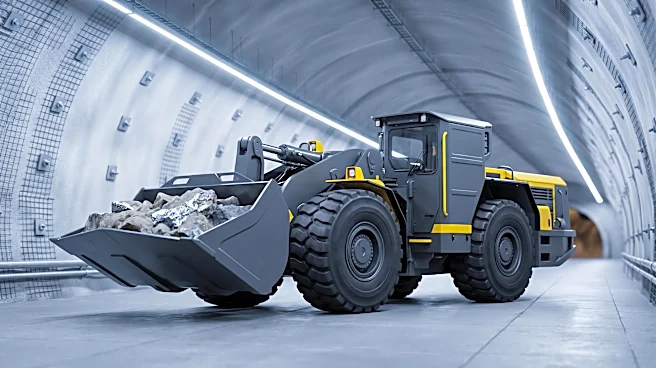
from August 1 of this year and extends until July 31, 2029. The new contract includes a 4.5% wage increase in the first year, followed by the greater of 3.5% or the consumer price index (CPI) in the second year, and the greater of 3% or CPI in the third year. This agreement is a crucial step for Sibanye in its plan to fully mechanize its U.S. PGM operations, transitioning from a rock-breaking incentive to a team-based incentive and modernizing certain legacy benefits to align with the U.S. market. However, strike actions by USW members are still ongoing at the Stillwater East mine and the Columbus Metallurgical Complex.
Why It's Important?
This wage agreement at the East Boulder mine is significant for both Sibanye-Stillwater and its workforce, as it provides stability and a clear path for future operations at that specific site. For the company, securing this agreement is vital for implementing its long-term strategy of full mechanization and modernizing labor practices, which could lead to increased efficiency and productivity. For the workers at East Boulder, the guaranteed wage increases and updated benefits offer financial security and improved working conditions. However, the continued strikes at the Stillwater East mine and Columbus Metallurgical Complex highlight ongoing labor disputes within the company's U.S. operations. These unresolved strikes could impact Sibanye-Stillwater's overall production targets and financial performance, as well as create uncertainty for the affected employees and local communities dependent on these mining operations. The situation underscores the challenges of labor negotiations in the mining sector, particularly when implementing significant operational changes.
What's Next?
Sibanye-Stillwater has stated its commitment to constructive engagement to reach agreements that ensure the long-term sustainability of its operations. The immediate focus will be on resolving the ongoing strikes at the Stillwater East mine and the Columbus Metallurgical Complex. This will likely involve continued negotiations between the company and the United Steel Workers International Union. The success of the East Boulder agreement could serve as a template or influence future discussions for the other striking facilities. The company's broader plan for full mechanization across its U.S. PGM operations will proceed, with the East Boulder mine leading the way. The outcome of the remaining labor disputes will determine the pace and success of these modernization efforts and will have a direct impact on the company's production capacity and financial outlook in the coming years. Stakeholders, including investors and employees, will be closely watching for developments in these ongoing negotiations.
Beyond the Headlines
The situation at Sibanye-Stillwater's U.S. operations reflects a broader trend in the mining industry towards automation and modernization, driven by economic pressures and technological advancements. The shift from individual rock-breaking incentives to team-based incentives at East Boulder signifies a change in labor management philosophy, aiming to foster collaboration and overall efficiency rather than individual output. This transition, while potentially beneficial for long-term productivity, can be a point of contention during labor negotiations, as it alters established work practices and compensation structures. The ongoing strikes at other facilities underscore the human element in such transitions, where workers may resist changes that they perceive as detrimental to their livelihoods or working conditions. This scenario highlights the ethical responsibility of companies to manage technological transitions in a way that is fair to their workforce, while also balancing the economic imperatives of modernization. The long-term implications could include a more automated and efficient mining sector, but also a need for retraining and upskilling the workforce to adapt to new roles and technologies.