





What's Happening?
Bahrain has approved four significant investment projects totaling $3.89 billion under its Golden License program. These projects, announced at the Gateway Gulf 2026 event in Manama, aim to attract international investment and diversify the nation's economy.
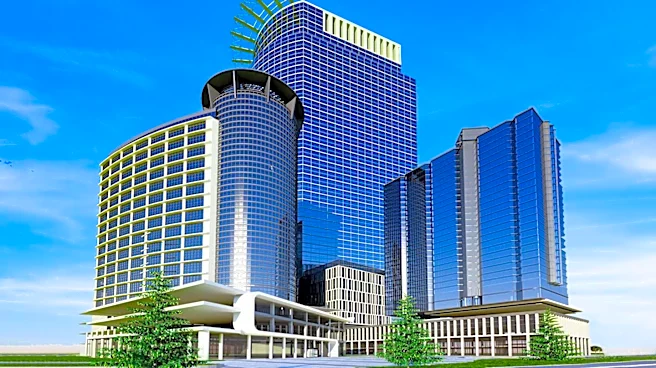
The investments involve major international and regional companies, including DHL, Capital A (parent company of AirAsia), Melia, Infracorp, and Digital City Bahrain. The Golden License program, established in 2023, offers incentives such as streamlined approvals and access to government services for large-scale investments. The approved projects span aviation, real estate, and technology sectors, with DHL establishing a regional aircraft maintenance, repair, and overhaul (MRO) center, and Capital A bringing AirAsia's operations, air cargo, and aircraft maintenance facilities to Bahrain. In real estate, Melia and Infracorp will develop a waterfront project on Amwaj Islands, while Digital City Bahrain will create a mixed-use development featuring residential, commercial, educational, and innovation facilities. The event also highlighted over $20 billion in expected investment announcements and showcased Bahrain's robust investment framework.
Why It's Important?
These approved investments are crucial for Bahrain's economic diversification strategy, reducing its reliance on oil and gas revenues. By attracting significant foreign direct investment (FDI) in key sectors like aviation, real estate, and technology, Bahrain aims to create new job opportunities, enhance its infrastructure, and strengthen its position as a regional economic hub. The Golden License program's success in drawing such substantial capital demonstrates its effectiveness in providing a competitive and attractive environment for international businesses. The development of a regional MRO center by DHL and the expansion of AirAsia's operations will significantly boost Bahrain's aviation sector, potentially making it a key player in regional logistics and air travel. The real estate projects will contribute to urban development and tourism, while the Digital City Bahrain project is expected to foster innovation and technological advancement. This influx of investment signals growing confidence in Bahrain's economic stability and future growth prospects, potentially drawing further international interest and capital into the country.
What's Next?
Following the approval of these projects, the next phase will involve the commencement of construction and operational activities for the various developments. DHL will proceed with establishing its regional MRO center, and Capital A will integrate AirAsia's operations into Bahrain's aviation infrastructure. Melia and Infracorp will begin the development of their waterfront project on Amwaj Islands, and Digital City Bahrain will initiate its mixed-use development. The Bahrain Economic Development Board will likely continue to promote the Golden License program to attract more international investors, building on the momentum generated by these announcements. Further investment announcements are anticipated as Bahrain continues its efforts to diversify its economy and strengthen its investment partnerships. The success of these initial projects will be critical in demonstrating Bahrain's capacity to host and support large-scale international ventures, potentially leading to a sustained increase in FDI and economic growth.
Beyond the Headlines
The strategic investments in Bahrain reflect a broader trend in the Gulf Cooperation Council (GCC) region towards economic diversification and reducing reliance on hydrocarbon revenues. By focusing on sectors like aviation, logistics, real estate, and technology, Bahrain is positioning itself as a modern, service-oriented economy. This shift has significant implications for regional competition, as other GCC nations are also pursuing similar diversification strategies. The Golden License program, with its incentives and streamlined processes, highlights a proactive approach by the Bahraini government to create an attractive business environment. This could lead to increased regional economic integration and collaboration, as well as heightened competition for foreign investment. The emphasis on technology and innovation, particularly with projects like Digital City Bahrain, suggests a long-term vision for developing a knowledge-based economy, which is crucial for sustainable growth in the 21st century. The success of these initiatives could serve as a model for other developing economies seeking to attract and retain international capital.