







What's Happening?
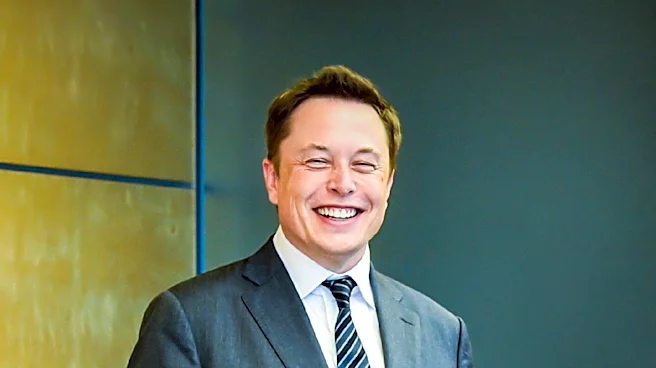
Brian Armstrong, the billionaire CEO of Coinbase, has publicly stated his belief that much of traditional philanthropy is counterproductive and can be a 'net negative' for the world. During an appearance on the Katie Miller Podcast, Armstrong articulated
a contrarian view, suggesting that charitable institutions can become overly influenced by politics rather than focusing on service. He cited Microsoft co-founder Bill Gates as an example of a billionaire using philanthropy to rehabilitate a public image. Armstrong, whose fortune is estimated at approximately $8.7 billion, has indicated that he would not engage in traditional charitable giving, stating, 'I'm not going to do that.' This stance comes amidst broader discussions about the role of wealthy individuals in addressing societal needs, particularly as communities face strained public budgets and rising costs.
Why It's Important?
Armstrong's comments are significant as they challenge conventional perceptions of philanthropy and raise questions about the responsibilities of ultra-wealthy individuals in contributing to public welfare. His perspective could influence how other tech billionaires and high-net-worth individuals approach charitable giving, potentially leading to a re-evaluation of philanthropic models. If more wealthy individuals adopt similar views, it could impact funding for public health, education, cultural spaces, and environmental protection, areas that traditionally rely on both public and private support. The debate also highlights the historical context of philanthropy, where powerful business figures like Andrew Carnegie and John D. Rockefeller used charitable acts to manage public perception and serve their reputations. Armstrong's remarks underscore a growing skepticism about the effectiveness and motivations behind large-scale charitable foundations, suggesting that some may be 'captured by ideology' rather than genuinely serving their intended purpose.
What's Next?
Armstrong's statements are likely to fuel ongoing discussions within the philanthropic sector and among the ultra-wealthy regarding the efficacy and impact of charitable giving. While he has expressed a disinclination towards traditional charity, it remains to be seen if he will explore alternative forms of social contribution or investment that align with his views on productivity and service. The broader conversation may also prompt a closer examination of the transparency and political influences within large charitable organizations. Communities and public institutions, which often depend on philanthropic funding, may need to consider strategies to reduce their vulnerability to the personal opinions and choices of wealthy individuals. This could involve advocating for stronger public funding mechanisms or exploring new models of community support that are less reliant on individual billionaire donors.
Beyond the Headlines
Armstrong's critique of philanthropy delves into deeper ethical and societal implications concerning wealth distribution and corporate social responsibility. His argument that charities can be 'net negative' or 'captured by ideology' suggests a fundamental distrust in established charitable frameworks. This perspective could inadvertently legitimize a hands-off approach to social issues among the wealthy, potentially exacerbating inequalities if public institutions are unable to fill the funding gaps. The historical parallel to figures like Carnegie and Rockefeller, who used philanthropy to shape public image, highlights the complex interplay between wealth, power, and public perception. Armstrong's stance also implicitly questions the very definition of 'giving back' and whether traditional charity is the most effective means to address systemic problems. This could lead to a re-evaluation of how societal impact is measured and whether direct investment in innovation or market-driven solutions might be preferred over conventional charitable donations by some wealthy individuals.