




What's Happening?
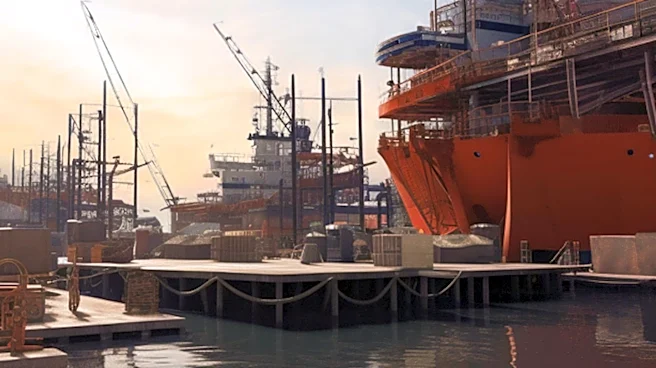
HD Hyundai and Kiewit Maritime Co. have formed a joint venture, HD Kiewit Shipbuilding LLC, to develop a new shipyard in the United States. The companies aim to begin construction in 2027 and achieve full-scale operations by 2029. This partnership combines
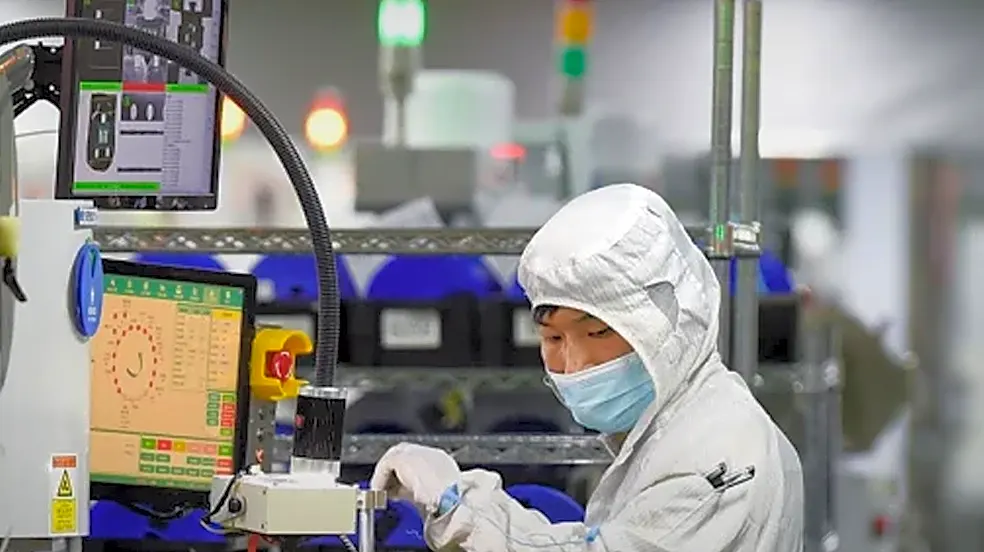
HD Hyundai's expertise in shipbuilding technology and shipyard operations with Kiewit's capabilities in engineering, construction, and fabrication. The proposed shipyard will be located at an existing industrial site with deep water access to the Gulf, and it is projected to create up to 3,000 jobs at full capacity. Initially, the venture will focus on opportunities in naval auxiliary and commercial vessel construction, as well as fabricating ship blocks and modules for other U.S. shipbuilders. The facility plans to incorporate HD Hyundai's 'Future of Shipyard (FOS)' model, featuring digital twins, automated production systems, and robotic welding to enhance productivity, quality, and safety.
Why It's Important?
This joint venture marks a significant development for the U.S. shipbuilding industry, potentially bolstering domestic manufacturing capabilities and reducing reliance on foreign shipyards. The creation of a new, technologically advanced shipyard, incorporating digital twins and automation, could set new standards for efficiency and quality in U.S. vessel construction. The project's focus on naval auxiliary and commercial vessels aligns with national security interests and economic growth, supporting both defense readiness and maritime trade. The potential for up to 3,000 jobs represents a substantial economic boost for the region where the shipyard will be located, creating employment opportunities in skilled trades and engineering. Furthermore, the initiative to develop domestic supply chains for marine components and logistics could strengthen the broader U.S. industrial base and foster greater self-sufficiency in maritime manufacturing.
What's Next?
The immediate next steps for HD Kiewit Shipbuilding LLC involve finalizing the selection of the industrial site and commencing detailed planning for construction, targeting a 2027 start. The companies will also focus on developing technical training and workforce development programs to prepare for the projected 3,000 jobs. Over the next few years, the venture will explore specific contracts for naval auxiliary and commercial vessel construction, as well as partnerships with existing U.S. shipbuilders for module fabrication. Stakeholders, including government agencies, industry partners, and local communities, will closely monitor the progress of this project. The successful implementation of HD Hyundai's 'Future of Shipyard' model will be crucial for demonstrating the shipyard's competitive advantage and its potential to revitalize U.S. shipbuilding capabilities.
Beyond the Headlines
The establishment of a new, technologically advanced shipyard in the U.S. through this joint venture has profound long-term implications. It signifies a strategic effort to re-shore critical manufacturing capabilities, enhancing national security by ensuring a robust domestic capacity for naval and commercial vessel construction. This move could also stimulate innovation across the broader maritime industry, as the adoption of digital twins, automation, and robotic welding pushes other U.S. shipbuilders to modernize. Ethically, it raises questions about the balance between automation and human labor, and the need for comprehensive workforce retraining programs. Environmentally, the development of a new industrial facility will require careful planning to mitigate its ecological footprint, particularly given its deep-water access to the Gulf. Culturally, it could reignite interest in maritime careers and skilled trades, contributing to a resurgence of American industrial pride and expertise.